Licensed & Insured Roofing Contractor
Call (833) 754-0319
SummitShield Roofing
SummitShield Roofing project example in Falls Church, VA
Falls Church Roofing Projects

Falls Church Roofing Projects: See the Work Behind the Finished Roof

A roofing contractor’s service list tells you what the company says it can do.

A project tells you more. It shows the roof that existed before the work, the conditions that influenced the scope, what materials or system were used and what the finished work actually looked like.

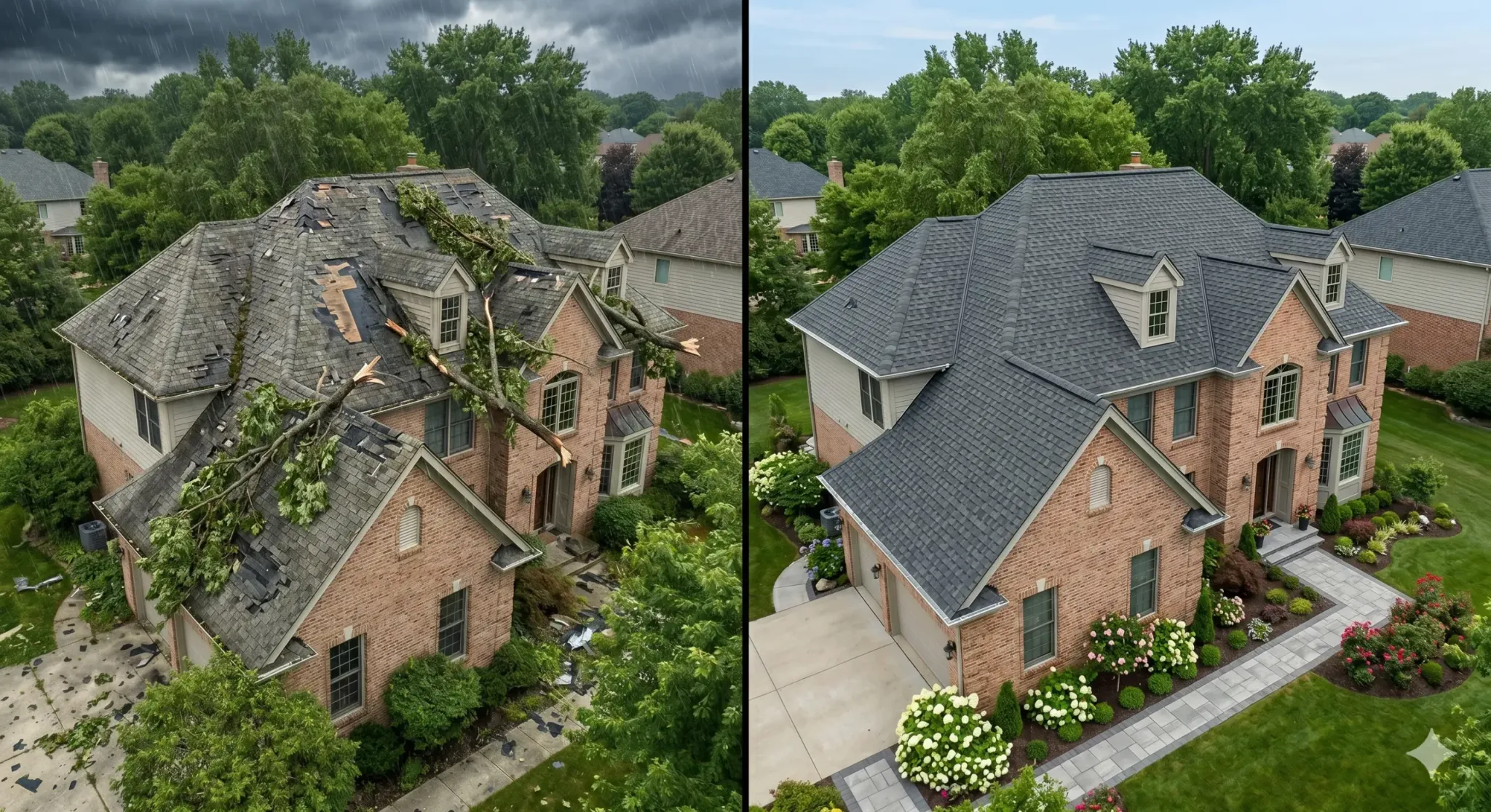
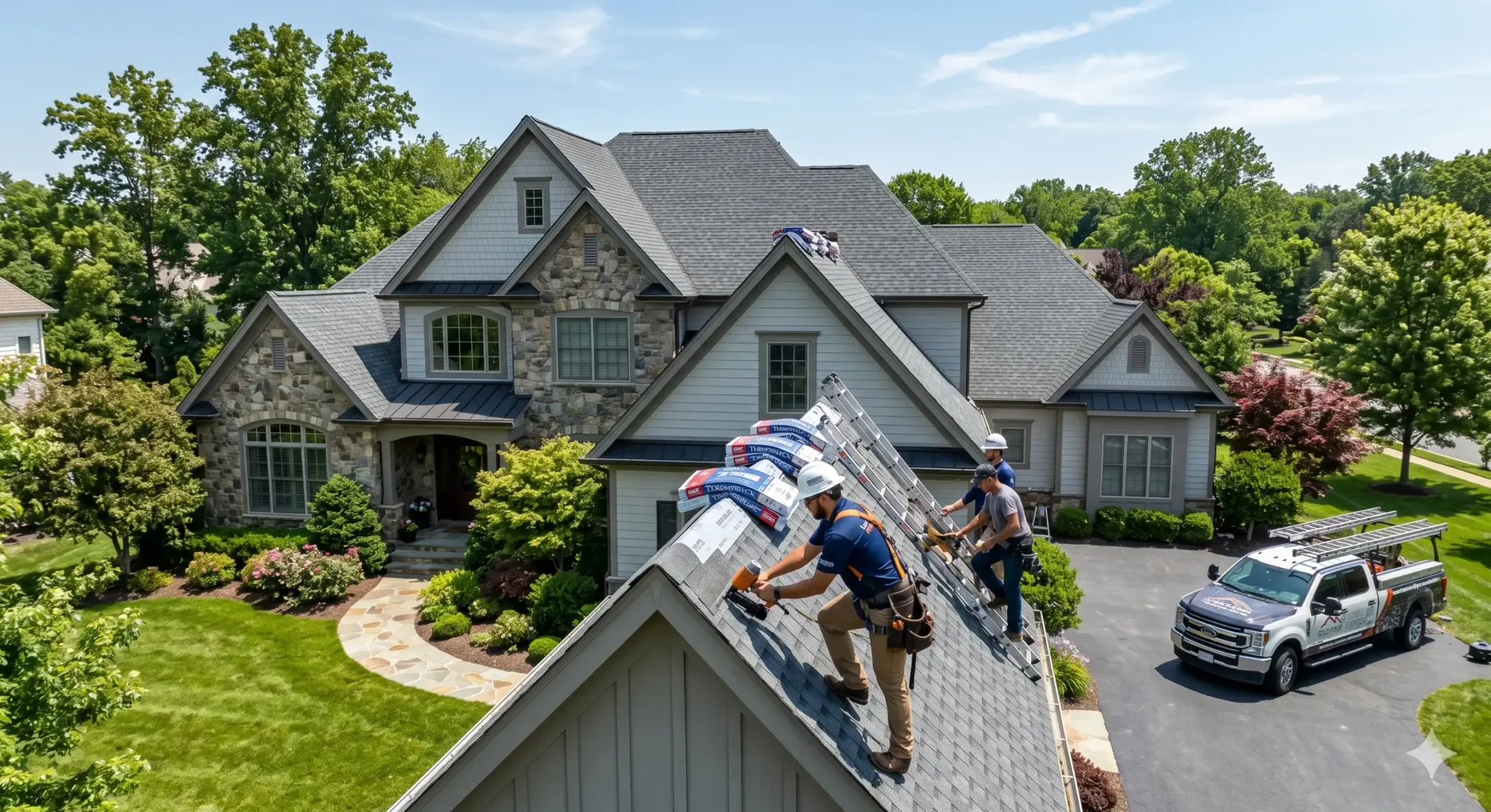
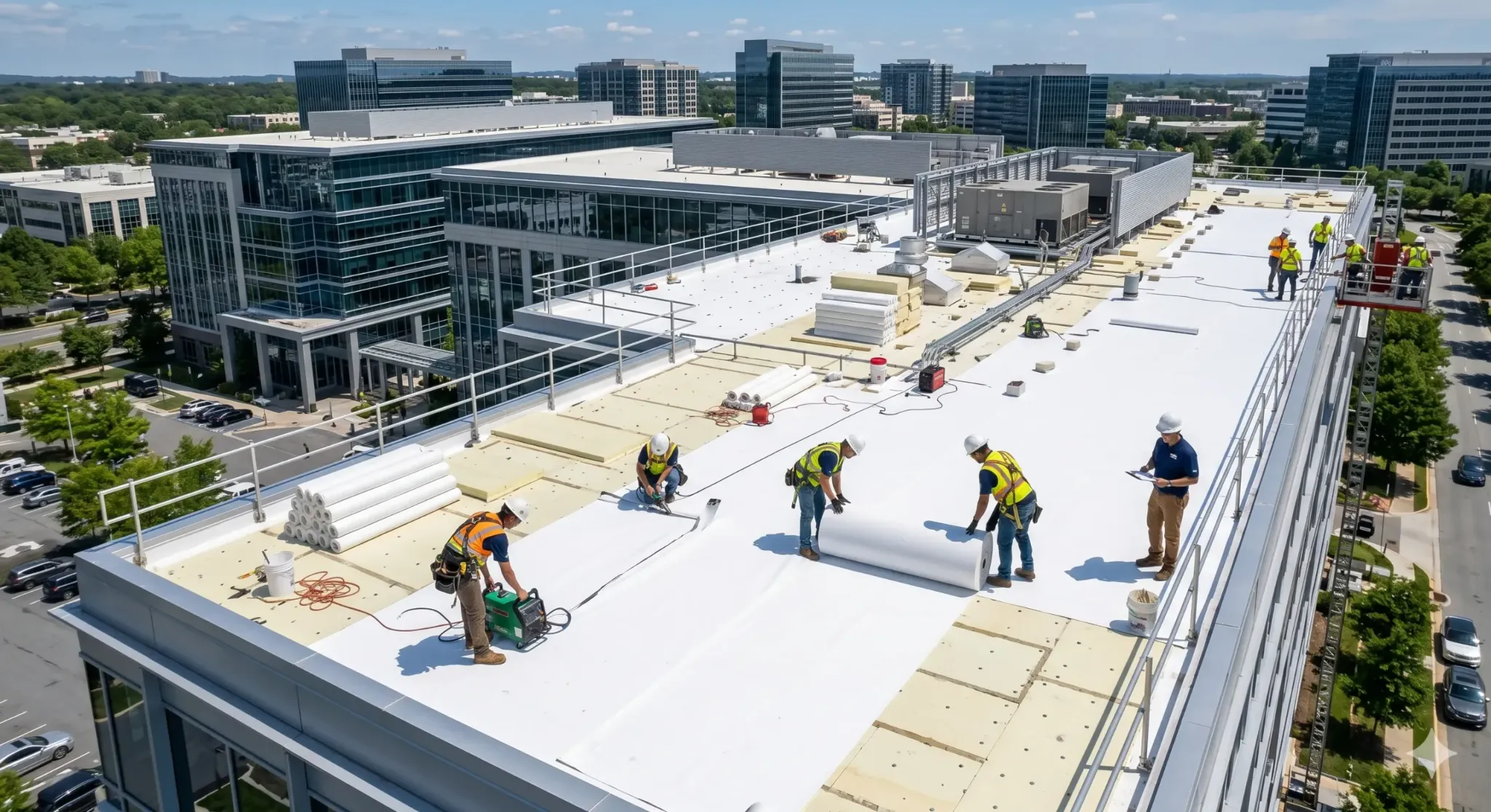
This project library documents SummitShield Roofing work across Falls Church and Northern Virginia, including residential roof replacements, home roofing upgrades and commercial low-slope roofing. Our currently published project set includes an architectural-shingle replacement, a premium residential upgrade and a flat commercial roof system.

Use these examples to compare the type of work you’re considering rather than judging a roofer from finished-roof beauty shots alone.

Reading a Before-and-After

What to Look for in a Roofing Before-and-After

The “after” image is only half the story.

A useful roofing project record should help you understand what changed between the two images.

Before

Look for documentation of the actual starting condition:

  • 1deteriorated or damaged roof covering
  • 2previous repair areas
  • 3flashing conditions
  • 4roof penetrations
  • 5valleys and transitions
  • 6low-slope drainage conditions
  • 7roof geometry

During

This is often the most valuable stage. Depending on the project, progress photography can show:

  • 1exposed roof decking
  • 2localized damaged sheathing
  • 3underlayment
  • 4flashing before it is covered
  • 5roof-to-wall transitions
  • 6penetration details
  • 7low-slope seams
  • 8drainage areas

A beautiful finished roof cannot show you those hidden stages afterward.

After

The final images should establish:

  • 1finished roof covering
  • 2ridge and hip details where applicable
  • 3flashing transitions visible from the exterior
  • 4completed roof planes
  • 5cleaned property
  • 6overall appearance of the finished system

The strongest project evidence connects all three stages rather than presenting only a distant photo of new shingles.

Find a Relevant Comparison

Compare Projects That Resemble Your Roof

Not every roofing project is equally useful to every customer.

If your house has a simple gable roof, a straightforward shingle replacement may be the most relevant comparison. If your property has:

  • 1multiple valleys
  • 2dormers
  • 3chimneys
  • 4additions
  • 5steep roof planes
  • 6lower-slope sections
  • 7commercial drainage
  • 8rooftop penetrations

look for projects that show those same kinds of details.

A project with similar geometry tells you more about contractor execution than a project that merely uses the same shingle color.

Beyond the Shingle

Look Beyond the Finished Roofing Material

Project photography can help answer questions that product samples cannot. For example:

How was the roof deck handled?
If deteriorated decking was discovered, useful documentation shows where the condition occurred and how the scope changed.
Were transition details addressed?
Chimneys, walls, valleys and penetrations are more revealing workmanship evidence than a large uninterrupted field of shingles.
Was the system built in stages?
Underlayment and other concealed components are easier to evaluate during installation than after the roof is finished.
Does the roofing fit the property?
A material should be evaluated across the whole roof and home, not only as a sample in a showroom.

This is why SummitShield’s project library is intended to show roofing work in context rather than function as a stock-photo gallery.

Different Evidence

Replacement Proof and Repair Proof Should Show Different Things

A replacement project should demonstrate a complete system transition from existing roof to new roof.

Repair work needs different evidence. For a localized repair, the useful proof is usually:

  • 1the failed area
  • 2what caused the problem
  • 3how far the defect extended
  • 4what was opened or removed
  • 5how the repair tied back into serviceable surrounding roofing
  • 6the completed detail
What’s Worth Recording

Project Details That Are Worth Recording

For each documented SummitShield project, the useful facts are straightforward:

Project detailWhy it matters
Property / roof typeHelps you find projects relevant to your own roof
Service performedSeparates repair, replacement and other work
Existing conditionEstablishes why the project happened
Roofing material or systemShows what was actually installed
Roof geometryGives context to workmanship complexity
Decking findingsDocuments concealed conditions where relevant
Flashing / penetration workShows treatment of vulnerable details
Before photosEstablishes the starting condition
Progress photosShows work that will later be concealed
After photosShows the finished result
Project outcomeExplains what changed rather than relying only on appearance

That is also the information a detailed project case study should preserve.

Comparing Contractors

Use Project Proof to Compare Contractors More Carefully

When evaluating roofing companies, don’t ask only “Do you have photos?” Ask whether the photos help you understand the work.

A folder containing dozens of completed roofs may prove that roofs were photographed.

A project sequence showing the original condition, exposed roofing components, corrective work and final result provides much stronger evidence of how the contractor approaches the job.

For larger projects, especially, look for evidence related to:

  • 1your roof type
  • 2similar architectural complexity
  • 3the material you’re considering
  • 4workmanship at transitions
  • 5concealed-stage documentation
  • 6property protection
  • 7cleanup

The goal is not to find a house identical to yours.

It is to see whether the contractor has documented the kind of workmanship your project will depend on.

Appearance vs. Fit

Choosing Between Material Examples

If you’re comparing asphalt shingles with another roofing option, the project gallery can help you judge appearance on a full-scale building.

But a gallery should not make the technical material decision for you.

Roof slope, existing construction, drainage, architecture and long-term priorities still matter.

Use completed projects to answer: “What does this material look like on a real property?”

Use our dedicated roofing materials guide to answer: “Which material or roofing system fits my property?”

Those are related questions, but they are not the same search intent.

Your Own Scope

From Roofing Project Evidence to Your Own Scope

Seeing relevant work should help you ask better questions about your own roof.

If a replacement project resembles your property, you can discuss:

  • 1whether your roof has similar complexity
  • 2which roofing system fits
  • 3whether decking conditions are expected
  • 4which flashing details need attention
  • 5what project stages will be photographed
  • 6how the final scope will be documented

If your roof has a different problem entirely, the project gallery should route you toward the appropriate service rather than force the comparison.

SummitShield’s project work supports our broader roofing services in Falls Church, while each individual service page owns the commercial detail for that type of roofing work.

Documentation on Your Project

Proof Should Continue During Your Project

Project documentation is not useful only for future website visitors.

The homeowner or property manager paying for the work should also be able to understand what happened. Depending on scope, meaningful documentation may include:

  • 1initial roof conditions
  • 2significant defects
  • 3decking exposed during tear-off
  • 4concealed repairs before covering
  • 5flashing or penetration details
  • 6installation progress
  • 7finished roof
  • 8final site condition

SummitShield uses photo documentation where it adds useful project evidence and completes appropriate roofing work with professional cleanup and final project review.

Talk With Our Roofing Team About Your Roof

Speak With SummitShield About Your Falls Church Roofing Project

If you’ve seen a project that resembles what you’re considering, tell us what caught your attention.

It might be the roof type, the material, a similar transition, a commercial drainage condition or simply the scale of the work.

We’ll use your actual property and roof condition to define the scope rather than assuming your project should copy another roof.

Direct Roofing Hotline

(833) 754-0319

Serving Falls Church, Arlington, Fairfax, McLean, Vienna, Alexandria, and Northern Virginia.

Call Now
Call a RooferTalk to a Roofer