Earlier Service Life
Age alone generally should not create replacement urgency. Unexpected problems deserve diagnosis because they may indicate isolated damage, installation issues, storm damage or flashing/penetration failure.

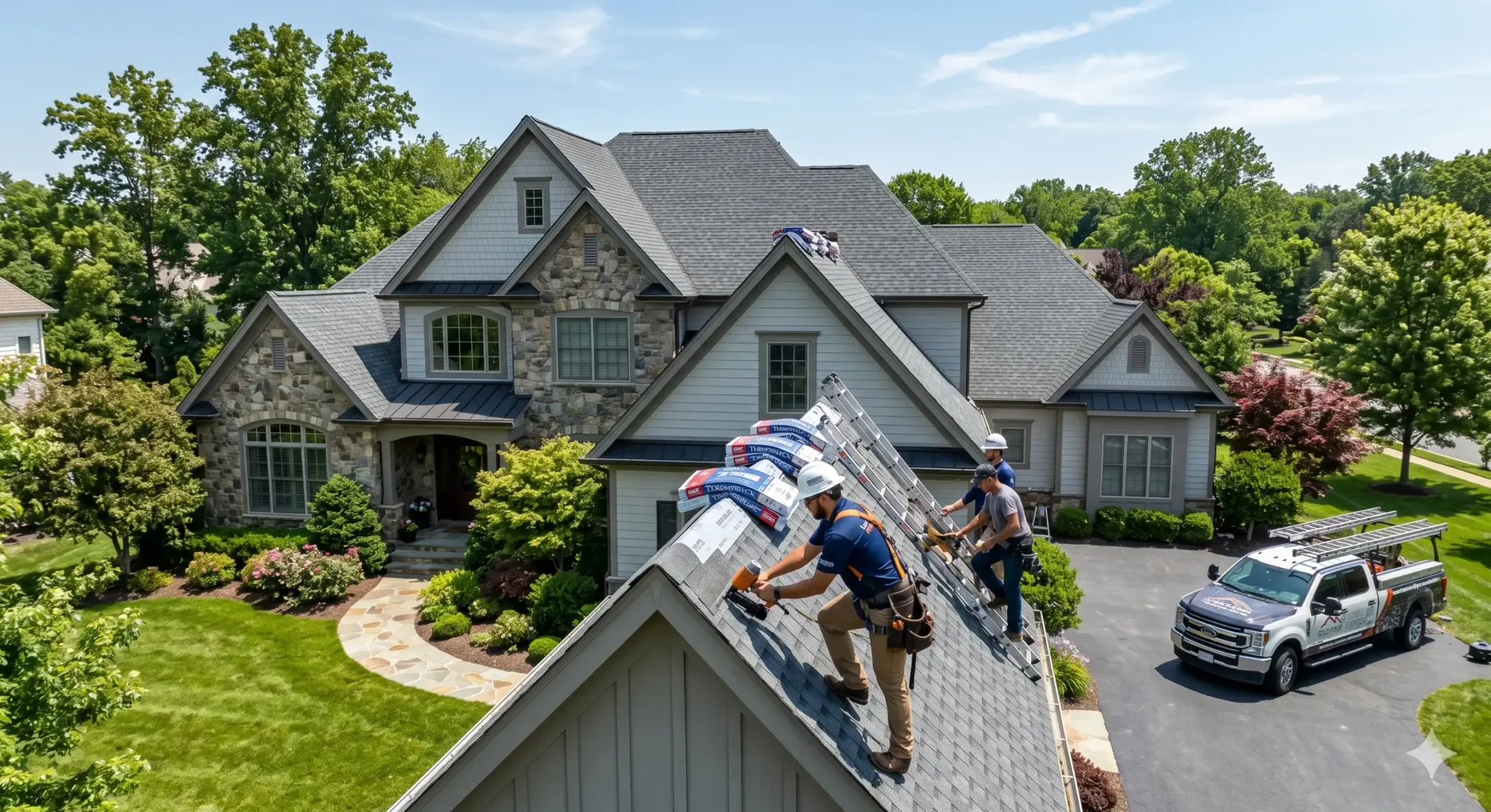
For planning purposes, an asphalt-shingle roof commonly lasts around 20–30 years, while architectural shingles can sometimes remain serviceable longer depending on the product, installation and exposure.
Those numbers are useful starting points.
They are not expiration dates.
Asphalt shingles do not have a single predetermined expiration date because weather, geographic location, moisture, UV exposure, manufacturer and other conditions influence the actual roof.
For a Northern Virginia homeowner, the better question is: “Given the material, installation, ventilation, weather exposure and current condition, where is my roof within its likely service life?”
| Roofing system | Useful planning range | Important qualification |
|---|---|---|
| Three-tab asphalt shingles | About 20–30 years | Installation, ventilation and exposure can shorten actual service life |
| Architectural asphalt shingles | Often 30–50 years depending on product/system | Do not assume the upper end without evaluating the actual roof |
| Metal roofing | Commonly 50+ years | Metal type, coating, detailing and installation matter |
| Properly designed coated-steel standing seam | 60+ years can be achievable | This reflects specific metal systems installed using appropriate practices |
| Low-slope / commercial roofing | Often around 20–30 years | Membrane/system type, drainage, maintenance and exposure matter |
Broad residential guidance places asphalt shingles around 20–30 years and metal at 50+ years, while more specific guidance distinguishes three-tab asphalt at roughly 20–30 years and architectural shingles at roughly 30–50 years. Research on certain properly designed and constructed coated-steel standing-seam systems has found service-life potential exceeding 60 years.
The table should therefore be treated as a planning framework, not a countdown clock.
Roof age is only one variable.
Consider two architectural-shingle roofs installed in the same year.
One may have correctly prepared decking, proper fastener placement, balanced attic ventilation, sound flashing, good drainage and limited storm damage.
The other may have poor ventilation, installation defects, repeated wind exposure, unresolved flashing leaks, chronic debris accumulation and previous moisture damage.
Both roofs are technically the same age.
They do not necessarily have the same amount of useful life remaining.
That is why we treat chronological age and roof condition as separate pieces of information.
A roof cannot consistently outperform the way it was built. Roof service life begins with details such as:
Manufacturer installation instructions require shingles to be installed over a properly built and supported roof deck and according to product-specific installation requirements.
A long manufacturer warranty or premium shingle does not erase weak installation.
If water is repeatedly getting behind flashing or shingles were improperly fastened from the beginning, the roof can develop problems well before a typical lifespan chart suggests it should.
Roof aging does not occur only on the exterior.
A vented attic has to manage heat and moisture beneath the roof deck.
Balanced intake and exhaust ventilation can help maximize the life expectancy of roofing materials, and proper airflow helps limit attic heat buildup, humidity and ice-dam conditions.
A typical balanced design allows air to enter lower at the soffit or eave area and exhaust higher near the ridge.
When that airflow is inadequate, excessive heat and moisture can become part of the roof-aging environment.
So when someone asks “How old are the shingles?” we also want to know “What conditions have those shingles and that decking lived over?”
Northern Virginia has a four-season climate with measurable year-round temperature variation, precipitation and winter weather.
For a roof, the important exposures can include:
These conditions do not create a universal “Virginia deduction” from a manufacturer’s lifespan number.
They affect roofs according to how exposed that particular roof is and how well the system handles the exposure.
A protected roof on one property and a highly exposed roof on another can age differently even within the same ZIP code.
Roof age calculations become less useful after significant damage.
A 12-year-old roof with substantial wind, hail or impact damage does not become healthy simply because a lifespan table says asphalt shingles should last longer.
Hail impacts and strong wind can damage roofing in ways that may not immediately produce obvious interior leakage.
This creates an important distinction: expected material lifespan tells you what may be achievable under suitable conditions. Remaining roof life depends on what has actually happened to the installed roof.
Those are not the same measurement.
Falls Church and Northern Virginia properties can have mature tree cover, multiple valleys and complex roof geometry.
Leaves and small debris can collect around valleys, gutters, roof transitions and lower roof sections.
Clearing debris from roof valleys and keeping water moving through drainage paths can help roofing materials perform as intended and prevent smaller issues from escalating.
Tree cover also changes exposure. A tree may shade one roof plane while dropping debris onto another. Branches can create impact damage during storms.
So “same material, same age” still does not guarantee the same service life from one roof plane to another.
A roof is rarely exposed evenly.
A simple gable roof has fewer intersections than a roof with several valleys, dormers, chimneys, roof-to-wall transitions, additions and different slopes.
Those additional details create more areas where water has to be controlled.
An older Falls Church home with a later addition may even have roof sections installed in different years.
The main house might have a 22-year-old roof while an addition was reroofed 10 years later.
Sometimes the correct answer is: different parts of this house have different roofing histories.
Routine care cannot turn a deteriorated roof back into a new one.
What it can do is keep avoidable problems from shortening an otherwise serviceable roof. Useful examples include:
Periodic roof inspection is worthwhile, and inspection frequency may need to increase based on location and severe-weather exposure.
The useful goal is not to “add X years” with a maintenance trick.
It is to avoid losing useful years to preventable deterioration.
This causes a lot of confusion.
A shingle may carry a “Lifetime” limited warranty. That does not mean the roof is guaranteed to remain serviceable for your lifetime.
Warranty language defines contractual coverage under specific terms and conditions. Service life describes how long the installed roof actually performs before replacement becomes appropriate.
Those timelines can be very different.
Asphalt shingles have no specific expiration date despite the existence of long manufacturer warranties.
So do not use “50-year warranty” as a substitute for “this roof will last exactly 50 years.”
The real roof still lives outdoors.
For homeowners with asphalt roofing, 20–30 years is a reasonable broad planning range, while some architectural systems may perform beyond that under favorable conditions.
Instead of choosing one number and circling it on the calendar, consider the roof in stages.
Age alone generally should not create replacement urgency. Unexpected problems deserve diagnosis because they may indicate isolated damage, installation issues, storm damage or flashing/penetration failure.
Condition becomes increasingly important. Previous repairs, ventilation, storm history and shingle condition can tell you more than age by itself.
Planning becomes more valuable. That does not mean automatically replacing a functioning roof. It means you should know its history, current condition, whether repairs are becoming more frequent, and whether widespread deterioration is developing.
This avoids both replacing too early and being surprised by a roof that has clearly been declining.
Metal roofing generally has much longer service-life potential than asphalt shingles.
Broad residential guidance gives 50+ years as a general metal-roof lifespan.
For specific systems, the potential can be longer. Research has concluded that properly designed and constructed unpainted 55% aluminum-zinc coated steel standing-seam roofing can have an expected service life exceeding 60 years, with other guidance placing properly designed metallic-coated steel roofs around 70 years in many non-coastal U.S. environments.
That does not mean every metal roof lasts 60 or 70 years.
Performance depends on metal and coating, panel/system type, seams, fastening or clip system, flashing, penetrations, installation and exposure.
If you are choosing between roof systems rather than researching the remaining life of an existing roof, compare roofing materials on our dedicated materials page.
Low-slope roofing deserves its own expectation because it does not behave like a steep-slope shingle roof.
Many commercial roofs generally last around 20–30 years, while material, climate, drainage, maintenance and installation quality can move actual lifespan considerably.
That is the useful principle for low-slope systems: system + drainage + installation + maintenance = service life — not simply the membrane name printed on the proposal.
If you bought the property without clear roofing records, start with documentation before guessing from appearance. Useful sources can include:
If none are available, a roofer may be able to estimate the roof’s general age range from material type and visible condition, but appearance cannot usually identify an exact installation date.
This distinction matters because: estimated age should guide investigation — not become a fabricated date entered into the home’s history.
| Roof situation | Better question |
|---|---|
| Relatively young roof with one problem | Why is this roof failing earlier than expected? |
| Mid-life roof in good condition | Is there anything shortening its remaining service life? |
| Older roof with no obvious problems | What is its current condition and how should I plan? |
| Older roof with recurring repairs | Are repairs still economically and technically sensible? |
| Roof with widespread deterioration at any age | Is the system still reliably serviceable? |
| Roof age unknown | What does the condition and available history tell us? |
Age provides context. Condition determines urgency.
A roof does not need an inspection simply because it reaches a birthday.
Inspection becomes more useful when age combines with uncertainty. Examples include:
A professional evaluation should distinguish between serviceable now, serviceable but worth monitoring, repairable condition, and broader deterioration that justifies replacement planning.
If your main question is how much useful life appears to remain, schedule a roof inspection rather than replacing the roof based only on its estimated age.
There is a point where lifespan averages stop being useful.
If the roof has already been evaluated and broad deterioration means replacement is the appropriate path, you no longer need another article telling you whether asphalt shingles last 20, 25 or 30 years.
You need to understand the actual reroofing project.
That is when our roof replacement in Falls Church page becomes the better resource.
SummitShield also provides broader Falls Church roofing services when the condition turns out to require another path.
A useful broad expectation is about 20–30 years for asphalt shingles, although architectural shingles can perform longer depending on the product, installation and exposure.
Do not treat either number as a guaranteed Virginia replacement date.
It can influence roof aging, but there is no universal number of years that should automatically be subtracted because a property is in Northern Virginia.
Weather exposure, storms, heat, moisture and winter conditions interact with material, installation, ventilation and the individual property’s exposure.
Poor ventilation can contribute to unfavorable heat and moisture conditions beneath the roof. Balanced intake and exhaust ventilation helps maximize roofing-material life expectancy and limit attic heat and humidity buildup.
No.
A 20-year age tells you the roof is mature enough that condition deserves attention. It does not prove the roof has failed.
The more useful questions are whether deterioration is widespread, repairs are recurring and the roofing system remains serviceable.
Yes.
Lifespan figures are ranges rather than fixed expiration dates. There is no single expiration date for asphalt shingles because actual roof condition depends on multiple environmental and system factors.
The opposite is also true: a roof can require replacement earlier because of damage, installation defects or other conditions.
If you’re trying to determine how much useful life your roof may have left, start with what is known:
roofing material; approximate installation year; repair history; storm history; current leaks or deterioration; ventilation or moisture concerns.
SummitShield Roofing can help put the age in context and determine whether the roof appears serviceable, needs closer evaluation or has moved into replacement planning.
Serving Falls Church, Arlington, Fairfax, McLean, Vienna, Alexandria, and Northern Virginia.
Call Now