Maintenance
Maintenance is proactive. The roof may not be leaking at all. The purpose is to check known wear areas, drainage, roof surfaces and details that benefit from periodic attention.

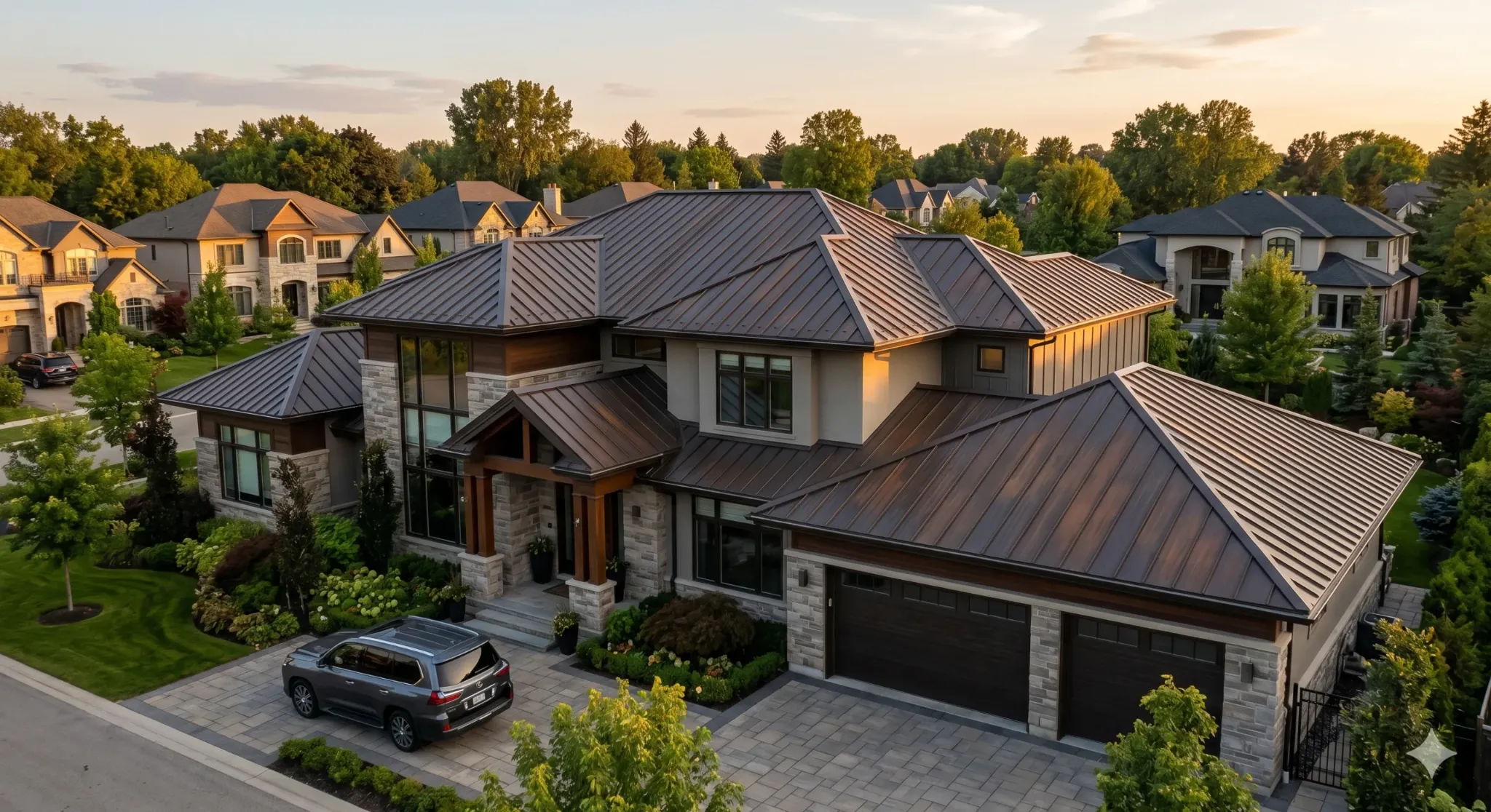
Roof maintenance is planned work intended to keep a serviceable roof functioning as intended.
A useful preventive maintenance visit looks for conditions that can be addressed before they become larger roofing problems: debris restricting drainage, deteriorating sealant at appropriate details, loose or vulnerable flashing, surface damage, penetrations, roof-edge conditions and other areas that regularly take weather exposure.
Recurring inspection can uncover conditions such as damaged shingles, deteriorated flashing and other visible problems before more serious damage develops, and checking debris, water, drains, flashing and wind-related changes is part of professional roof maintenance.
At SummitShield Roofing, the goal is straightforward: find small, maintainable conditions while they are still small—and separate them clearly from defects that have already become repair work.
These services overlap, but they should not be treated as interchangeable.
| Roofing need | Primary purpose | Typical outcome |
|---|---|---|
| Preventive maintenance | Preserve a serviceable roof and address routine maintenance items | Maintain, document, monitor or identify corrective work |
| Roof inspection | Determine the condition or cause of a suspected problem | Findings and recommendation |
| Roof repair | Correct a confirmed roofing defect | Defined corrective scope |
Maintenance is proactive. The roof may not be leaking at all. The purpose is to check known wear areas, drainage, roof surfaces and details that benefit from periodic attention.
Inspection is diagnostic. If you do not know whether the roof is damaged, why moisture is appearing or what a storm changed, schedule a roof inspection rather than treating uncertainty as routine maintenance.
Repair is corrective. Once there is a defined failure—such as damaged roofing, failed flashing or another localized defect—the appropriate next step may become roof repair.
That separation keeps a maintenance visit from becoming an excuse to label every minor condition a repair.
The scope should follow the roofing system and the property. For a typical maintenance visit, useful service areas can include:
The exact list should not be identical for every building.
An asphalt-shingle house with several valleys has different maintenance needs from a commercial low-slope roof with drains, penetrations and membrane seams.
One of the most practical parts of preventive roofing work is drainage.
Water should move off the roof without being unnecessarily trapped by debris or blocked drainage points.
Maintenance may involve attention to:
Keeping roofs and gutters clear of accumulated debris is recommended because blocked drainage can interfere with water movement and contribute to moisture-related problems.
Drainage deserves even more deliberate attention. Useful maintenance points can include:
Drain inspection and debris removal are important parts of commercial roof maintenance because clogged drainage allows water to remain on the roof.
The point is not simply to make the roof look clean.
It is to preserve the path water was designed to follow.
Large uninterrupted roof areas are often less complicated than the places where the roof meets something else. Maintenance should pay close attention to:
These details repeatedly appear in manufacturer maintenance guidance because flashing and penetrations are common areas where water-management problems can develop.
A maintenance visit is a good time to catch a developing condition before the symptom becomes: “There is now a stain on the ceiling.”
This is an important distinction.
Sealant can be appropriate at details that were designed to use it.
But preventive maintenance should never become a routine of coating every questionable area with caulk.
Before renewing a sealant condition, the roofer needs to understand:
On commercial systems, deteriorating sealant is among items that can sometimes be addressed through minor maintenance, while larger membrane, flashing and drainage defects are treated as conditions requiring separate corrective work.
A failed flashing detail should not be hidden under sealant simply because sealant is quicker.
Maintenance preserves a functioning detail. Repair corrects a failed one.
Most residential asphalt-shingle roofs do not need constant intervention.
The useful maintenance question is: What has changed since the last meaningful look? That can include:
On Falls Church properties, this can be particularly useful where mature tree cover, dormers, additions and intersecting roof planes create multiple areas for debris and runoff to concentrate.
Maintenance is not a replacement for normal roof aging. It is a way to avoid allowing a small preventable issue to unnecessarily accelerate that aging.
Commercial maintenance has a different character. A low-slope roof may contain:
For a property manager, useful maintenance should create a record over time: what was found → what was maintained → what needs monitoring → what now requires corrective work.
That gives management something more useful than waiting for each roof problem to arrive as an emergency.
For broader low-slope system, property-management and project-planning needs, see SummitShield’s commercial roofing service.
Preventive roof maintenance is especially useful when the roof is currently serviceable but has conditions worth managing. Examples include:
Leaves, branches and organic debris can affect drainage or collect around valleys and roof transitions.
More vents, walls, equipment curbs or other penetrations mean more transition details to monitor.
An older roof does not necessarily need replacement. It does benefit from knowing whether small conditions are beginning to develop.
Older repair areas should be part of the roof's known history rather than forgotten after the leak stops.
A small roof problem can affect tenant space, equipment, inventory or building operations, making documentation and planned care more valuable.
Dormers, additions, valleys and different roof planes create more transitions than a simple gable roof.
The maintenance program should reflect those details rather than apply the same generic checklist to every property.
There is no single maintenance schedule that fits every roof. A useful cadence should account for:
Biannual inspections can uncover developing roof conditions, and professional residential inspection at least annually—with twice-yearly review described as ideal—is common guidance.
For many properties, a spring/fall or otherwise twice-yearly rhythm is therefore a reasonable planning model.
But that should not become an arbitrary rule.
A newer, straightforward residential roof may need a different schedule from an aging roof, a heavily tree-covered home, a commercial low-slope building, or a roof with repeated previous problems.
Significant weather can also justify an additional condition check because one storm can materially change debris, drainage, flashing or roofing conditions.
A useful maintenance visit should make the roof’s condition easier to understand afterward.
SummitShield documents meaningful findings with photos where appropriate. A useful record can identify:
That is especially useful for commercial properties and roofs with recurring history. Over time, the documentation helps answer:
Is this the same area changing again? Is the roof stable between visits? Are small repairs beginning to accumulate? Is one part of the roof aging faster than the rest?
That history makes future decisions more informed.
The line should be clear.
| Finding | Likely path |
|---|---|
| Accessible loose debris affecting drainage | Maintenance |
| Drain or gutter obstruction | Maintenance where safely/serviceably removable |
| Minor deterioration at an intended sealant detail | Maintenance if the assembly is otherwise sound |
| Area that needs monitoring | Document and recheck |
| Missing or damaged roofing | Corrective evaluation / repair |
| Failed flashing allowing water entry | Repair |
| Open membrane seam or puncture | Repair |
| Active leak | Diagnosis and repair |
| Damaged decking | Corrective scope |
| Widespread roof deterioration | Broader evaluation |
Small issues such as debris, drain restrictions and some deteriorating sealant conditions may be addressed preventively, while larger defects should be documented and moved into corrective work.
A maintenance contract should not be used to disguise significant repair work as a collection of “touch-ups.”
Preventive maintenance is successful even when it discovers work that cannot responsibly be handled as maintenance. The finding should be documented and routed. For example:
A drainage area is obstructed by debris.
Restore drainage as part of maintenance where appropriate.
Flashing is visibly failing and water entry is present.
Define corrective repair.
Several unrelated sections show larger deterioration.
Evaluate whether the issue extends beyond preventive work.
If a defined defect needs correction, the dedicated roof repair page owns that service. This maintenance page does not turn every finding into a repair pitch.
That is a valid outcome.
Preventive maintenance should not require discovering a sales opportunity on every visit.
If the roof is serviceable, drainage is functioning, vulnerable details remain sound and there is no corrective defect, the recommendation can simply be: maintenance completed, condition documented, continue monitoring, review again at the appropriate interval.
That is one of the most useful differences between proactive roof care and waiting until every roofing conversation begins with a leak.
Falls Church properties do not all present the same maintenance conditions.
One house may have a straightforward asphalt-shingle roof. Another may have:
A commercial property may have an entirely different drainage and access pattern.
The maintenance scope should follow those conditions instead of relying on a generic city-based checklist.
SummitShield provides preventive maintenance within its broader Falls Church roofing services, with the maintenance visit kept distinct from inspection, repair and replacement work.
A maintenance visit should leave you with a clearer understanding of the roof than you had before it started. Depending on the roofing system and agreed scope, SummitShield’s maintenance approach can include:
SummitShield Roofing is a Virginia Class A licensed and insured contractor, and our roofing work is supported by trained crews and documented inspection practices.
The credential matters. For maintenance work, however, the more important proof is whether the contractor can distinguish between a roof that needs routine care, a roof with a specific defect and a roof that needs a broader diagnostic evaluation.
The schedule depends on the roofing system, age, condition, building use, tree exposure, drainage and previous problems.
Twice-yearly inspection can uncover developing roof conditions, while at least annual professional residential inspection—with twice yearly described as ideal—is common guidance. A significant storm or known roof event may justify an additional review.
No.
Maintenance is proactive care for a roof that is intended to remain in service.
An inspection is primarily diagnostic—it determines condition and helps answer a particular roofing question. If you have an unexplained leak, possible storm damage or uncertainty about overall roof condition, schedule a roof inspection instead of starting with maintenance.
No.
Maintenance can reduce avoidable risk and identify developing conditions earlier, but it cannot guarantee that storms, material failure, impact, hidden defects or future damage will never cause a leak.
Its value is proactive condition management, not a promise that the roof can never fail.
Proper maintenance can help preserve the useful service life available from a roof by preventing avoidable conditions from going unaddressed. Preventive maintenance protects the roofing investment and reduces the impact of hazards that can shorten roof performance.
It cannot restore a roof that has already reached the end of useful service life.
Yes.
Commercial low-slope roofing often places more emphasis on drains, scuppers, seams, rooftop penetrations, equipment curbs, edge conditions and ponding water.
Residential shingle maintenance more often emphasizes the roof covering, flashing, valleys, penetrations, gutters, attic conditions and tree/debris exposure.
If you want to manage the roof before the next problem becomes urgent, tell SummitShield Roofing:
what roofing system you have; approximately how old it is; whether repairs have been made before; whether the property has heavy tree or storm exposure; whether you’re managing a home or commercial building.
We’ll help determine whether preventive maintenance is the appropriate next step—or whether the roof first needs a separate condition inspection or corrective repair.
Serving Falls Church, Arlington, Fairfax, McLean, Vienna, Alexandria, and Northern Virginia.
Call Now