Keep It Outside the Active Work Area
Roofing work can involve removed material and other activity around the perimeter of the house. Parking farther away keeps the vehicle out of the immediate jobsite.

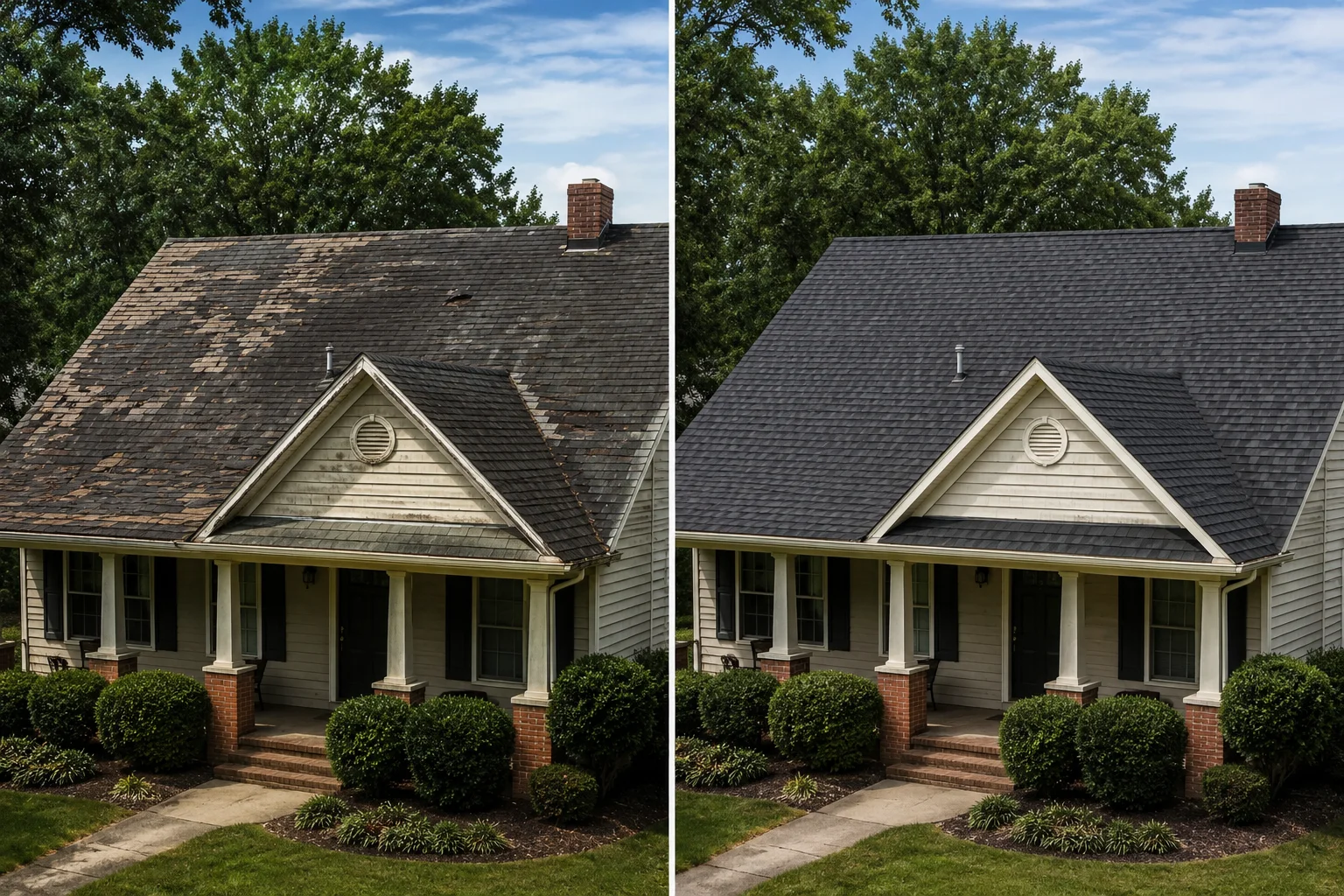
Plan to move vehicles out of the driveway before roofing work begins unless your contractor specifically tells you they can stay.
The best time to sort this out is before project morning, not after trucks or equipment have arrived.
IKO recommends moving vehicles a safe distance away the night before roofing work because supplier deliveries, equipment and a waste container may require driveway access. GAF also advises homeowners to consider whether a dumpster or roofing materials could block vehicles stored inside the garage.
| Item | Confirm Before Roofing Day | Why It Matters |
|---|---|---|
| Cars in driveway | Where should they be parked instead? | Keeps vehicles clear of the work and staging area |
| Cars in garage | Will driveway access remain open? | Prevents a needed vehicle from becoming blocked in |
| Material delivery | When and where is delivery expected? | Delivery vehicles need a clear approach and unloading area |
| Dumpster/debris container | Will one be used, and where will it sit? | It may occupy part or all of the driveway |
| Garage door | Will you need to use it during the project? | Access may be limited once equipment is positioned |
| Gates | Which gates need to remain unlocked or accessible? | Crew access may depend on side or rear entry |
| Walkways | Which route should the household use? | Separates normal household movement from the work zone |
| Shared driveway | Does a neighbor need advance notice? | Prevents access conflicts once trucks arrive |
| Essential access | Does anyone need a reliable route in or out? | Special access should be planned before staging begins |
A five-minute access conversation ahead of time can prevent a vehicle, delivery or household routine from conflicting with the work area.
In most cases, yes.
IKO’s homeowner preparation guidance recommends moving vehicles away from the driveway before the roofing team arrives. The driveway may be used throughout the day and can also be needed for a debris container or supplier access.
There are two practical reasons to move the car:
Roofing work can involve removed material and other activity around the perimeter of the house. Parking farther away keeps the vehicle out of the immediate jobsite.
The crew may need the space for work vehicles, equipment, deliveries or waste handling.
Moving a car therefore helps both vehicle protection and site access.
Do not choose a replacement parking spot based only on proximity. Use a legal location outside the area the contractor says must remain clear.
This is one of the easiest roofing-day problems to prevent.
A vehicle can be safely inside the garage but still become temporarily inaccessible if:
GAF specifically recommends moving vehicles, bicycles and other items out of the garage beforehand if the dumpster or roofing materials may block access to something you will need.
Think ahead to the entire day.
If you may need the vehicle for work, school pickup, an appointment or another obligation, take it out before the staging area is established.
Homeowners normally think of the driveway as parking space.
During roofing work, it may function more like a logistics corridor. Depending on the project plan, it could be used for:
That does not mean every project uses every driveway in the same way.
A short driveway, long driveway, narrow property, attached garage or limited street approach can change the plan considerably.
The useful question to ask is: “Which parts of my driveway need to remain completely clear, and for how long?”
That answer is more useful than assuming you will either have full access or no access all day.
The roofing crew may not be the first vehicle associated with the project to arrive.
Material suppliers can have their own delivery schedule. IKO specifically advises moving vehicles the night before because a supplier may arrive to drop off materials before the homeowner would otherwise move the car.
Ask in advance:
The homeowner does not need to direct the delivery.
The goal is simply to make sure a personal vehicle or locked access point does not interfere with a delivery plan already arranged by the contractor.
Material staging simply means placing project materials where the crew can access them efficiently during the work.
From a homeowner’s perspective, you do not need the technical details of what is being staged.
What matters is where the staging area will be. It might affect the driveway, the route to the garage, a side access path, part of the yard, or normal entry and exit around the house.
If you regularly use a particular route to bring in groceries, take a stroller outside, reach a backyard gate or move a bicycle from the garage, mention that before project day.
A route that looks unimportant to a crew may be essential to the household.
There is no universal location for every house.
A debris container may be positioned in a driveway when that location provides practical access to the work area. IKO notes that roofing crews commonly use a garbage bin or dumpster in the driveway during roofing work.
The exact location depends on the property and project plan. Before work begins, ask:
Do not assume one particular waste-handling setup.
Knowing the location tells you whether garage or driveway access will be restricted.
The container's schedule may differ from the crew's working hours.
If so, remove it before access becomes difficult.
GAF also recommends taking pre-project photographs of the driveway and exterior. That creates a simple record of the property’s condition before roofing activity or a dumpster is present.
If the driveway becomes part of the active work area, do not plan on repeatedly asking the crew to move equipment so a vehicle can enter and leave.
Instead, make a simple decision before the project:
Move it out beforehand.
Retrieve them beforehand.
Tell the contractor when discussing site access so the limitation can be considered in the plan.
This is one of those logistics issues that is easy to solve in advance and frustrating to discover after staging has started.
Driveway access is only part of the property plan.
The crew may also need clear movement around portions of the house. Walk the accessible exterior with the contractor and identify:
Do not assume every gate should simply be left open all day.
Instead, confirm which access points the crew actually needs and how household security should be handled.
If you have a gate that must remain closed because of a pet or child, mention that directly.
By this point, the important questions should be specific:
Confirm those details ahead of time with your local roofing contractor in Falls Church so vehicles, deliveries and household movement are planned before the work area is established.
That conversation is especially useful on properties where the driveway is narrow, garage access is essential or only one practical route reaches part of the house.
If another household shares the driveway or relies on the same access route, roofing logistics can affect more than your own property.
The safest approach is early communication. Find out:
Then give the affected neighbor useful information rather than simply saying roofing work is happening. For example:
“The driveway needs to remain clear from the morning until the delivery is complete” is much more helpful than “There will be roofers here tomorrow.”
Do not promise that access will remain open unless the contractor has confirmed it.
Project planning should account for people as well as vehicles.
Before work begins, identify the entrance the household expects to use.
Ask whether that path will remain appropriate during active work.
If the normal front walkway is part of the crew’s work area, another entrance may make more sense temporarily.
This is particularly worth discussing if the household includes an older adult, someone with limited mobility, a person who must leave for scheduled appointments, or children whose normal route passes through the work area.
Do not create your own shortcut through an active roofing area. Use the route agreed on with the crew.
Some access requirements cannot simply wait until the end of the workday.
If a household member depends on reliable vehicle access or there is another important access consideration, raise it before equipment is staged.
The contractor does not need private medical details. A practical statement is enough:
“We need to keep a usable route available for this vehicle.”
The purpose is to prevent an avoidable conflict between normal project staging and an access need the crew could not have known about.
Emergency access routes should never be treated as convenient storage or staging space.
The night before or before the agreed staging time:
The key is to settle these details while the property is still empty and easy to move around, not once trucks and equipment are already in place.
Do not assume you will have normal driveway access. Roofing crews may need the driveway for equipment, materials or a debris container.
Ask which areas will be unavailable and for how long before project day. IKO advises homeowners that the driveway may be needed throughout roofing work.
That is often the easiest approach when the contractor has asked for a clear driveway.
IKO specifically recommends moving vehicles the night before so they are not trapped or in the way if a supplier arrives early.
Only if you are confident you will not need it and the contractor has confirmed the access plan.
GAF recommends moving vehicles or other needed items out beforehand when a dumpster or materials could block garage access.
Use a legal parking location outside the work and delivery area identified by the contractor.
The right location depends on your property, street access and the crew’s staging plan, so confirm the required clear zone rather than guessing.
Have a roofing project coming up? SummitShield Roofing can coordinate driveway use, vehicle access, deliveries and project-day staging as part of roofing for Falls Church homes so those logistics are clear before work begins.
Serving Falls Church, Arlington, Fairfax, McLean, Vienna, Alexandria, and Northern Virginia.
Call Now