Licensed & Insured Roofing Contractor
Call (833) 754-0319
SummitShield Roofing
Roofing material options in Falls Church, VA
Falls Church Roofing Materials

Roofing Materials in Falls Church, VA: Choose the System That Fits the Roof

There is no single roofing material that is best for every Falls Church property.

For many steep-slope homes, architectural asphalt shingles offer a practical balance of appearance, system options and initial investment. Metal roofing can make more sense when longer-term performance, distinctive appearance or a different ownership horizon justifies the higher initial investment.

Flat and low-slope sections require a roofing system suited to that roof design and drainage conditions rather than automatically using the same material as the steeper main roof.

SummitShield Roofing works with manufacturer-backed roofing systems and products associated with GAF, Owens Corning and CertainTeed. Material selection starts with the property: roof slope, geometry, existing construction, drainage, architecture and what you want from the finished roof.

The visible material matters. But the best choice is the material that can be built into the right roofing system for that particular roof.

Start With the Roof

Start With the Roof, Not the Material Sample

Color boards and product brochures are useful near the end of the selection process.

They shouldn’t be the beginning.

Before choosing a roofing material, we want to understand:

  • 1whether the roof is steep-slope, low-slope or mixed
  • 2how many roof planes and transitions are involved
  • 3whether there are dormers, chimneys or additions
  • 4where water concentrates and drains
  • 5whether roof-to-wall conditions affect the system
  • 6how visible the roof is from the ground
  • 7what system is currently installed
  • 8whether the project is replacement or new installation
  • 9the owner's budget priorities
  • 10how long the owner expects the roof decision to serve the property

Those answers can eliminate inappropriate options before appearance becomes the deciding factor.

A material that performs well in one application isn’t automatically the right material for every roof section.

At a Glance

Roofing Material Options at a Glance

Roofing optionStrong fit whenMain tradeoff to consider
Architectural asphalt shinglesSteep-slope residential roofs where appearance, selection and practical upfront investment matterTypically a shorter long-term ownership horizon than premium metal systems
Metal roofingOwners prioritizing durability, distinctive appearance and longer-term valueHigher initial investment and more specialized detailing
Low-slope roofing systemFlat or lower-slope areas where drainage and membrane/system design drive selectionMust be matched to roof slope, existing assembly and drainage rather than chosen by appearance
Mixed roofing approachHomes or buildings with steep main roofs plus lower-slope additions or porchesTransitions between systems require careful detailing

The useful comparison is therefore not: Which roofing material is best?

It is: Which roofing system is best for this roof and this owner’s priorities?

Steep-Slope Choice

Architectural Asphalt Shingles: The Practical Steep-Slope Choice

Architectural shingles are multi-layer asphalt shingles designed to provide more dimensional appearance than basic strip shingles.

For many residential steep-slope projects, they make sense because manufacturers offer a wide range of styles, colors, performance features and coordinated roofing accessories.

Asphalt shingle roofing is part of a larger system that can include roof-deck protection, leak barriers, starter strips, hip and ridge shingles and ventilation, with shingles marketed together with underlayment and component products as a coordinated system.

Where Architectural Shingles Fit Well

They are especially practical when:

  • 1the roof has an appropriate steep slope
  • 2a traditional residential appearance is desired
  • 3the homeowner wants a broad color and style selection
  • 4initial investment matters
  • 5individual roofing details may need to be serviceable later
  • 6a coordinated manufacturer-backed shingle system is desired

What Matters More Than the Shingle Name

Homeowners often compare two proposals by reading only the shingle line. That doesn’t tell you enough. A shingle roof also relies on the supporting system, which can include:

  • 1underlayment
  • 2leak protection in vulnerable areas
  • 3starter materials
  • 4flashing
  • 5pipe boots and penetrations
  • 6hip and ridge components
  • 7attic ventilation

So when comparing asphalt-shingle proposals, don’t ask only “Which shingle am I getting?” Ask: “Which roofing system is being installed around that shingle?”

A Different Investment

Metal Roofing: Higher Initial Investment, Different Long-Term Priorities

Metal roofing changes the material conversation.

Rather than overlapping individual asphalt shingles, metal roofing can use panel or formed-metal systems with very different detailing, fastening and water-shedding characteristics.

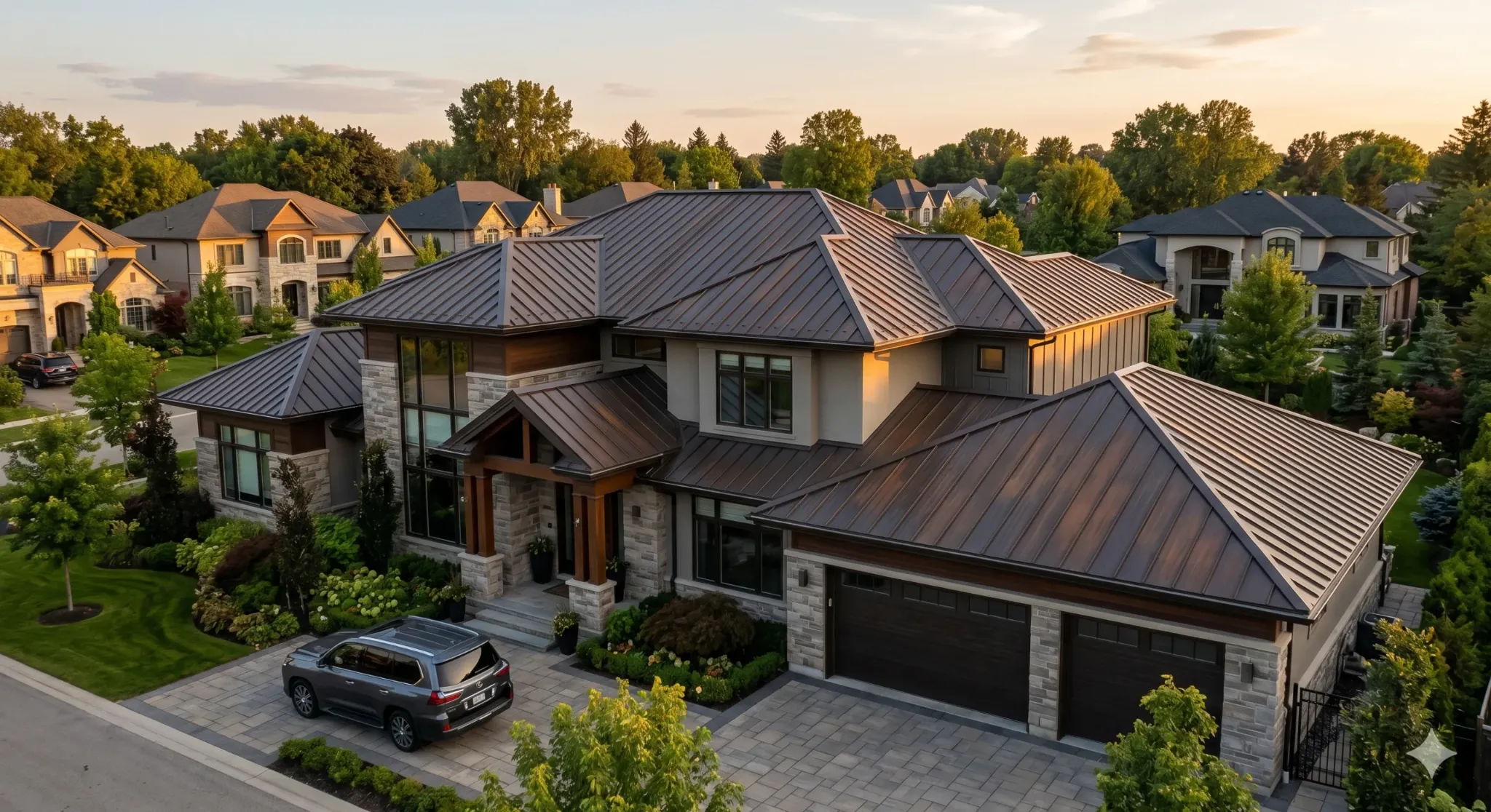
Standing-seam systems, for example, place the primary seams above the roof surface. Long service life, durability and weather resistance are among the reasons owners consider metal roof systems, which exist for both steep- and low-slope applications.

Metal Makes More Sense When the Owner Values

  • 1a longer-term roofing investment
  • 2a distinctive architectural appearance
  • 3durable roof material
  • 4lower emphasis on the cheapest initial project
  • 5a system designed specifically around metal-roof detailing

The Tradeoff Is Upfront Commitment

Metal roofing generally requires a larger initial investment than architectural asphalt shingles.

That doesn’t automatically make it better or worse. It changes the financial question.

A homeowner focused on minimizing today’s project cost may reasonably prefer architectural shingles. An owner looking farther ahead may place more value on metal’s long-term characteristics.

The right comparison depends on how the property will be owned and used, not on declaring one material universally superior.

Head to Head

Asphalt Shingles vs. Metal Roofing

For many homeowners, this is the comparison that matters most.

Decision factorArchitectural asphalt shinglesMetal roofing
Initial investmentGenerally lowerGenerally higher
AppearanceTraditional residential look with extensive style/color selectionDistinct panel or formed-metal appearance
Roof applicationCommonly used on suitable steep-slope roofsAvailable for suitable steep- and certain low-slope applications
Repair familiarityWidely serviceable as a shingle systemRequires contractors familiar with the specific metal system
Long-term outlookPractical balance of cost and performanceOften selected for longer-term durability goals
System detailingUnderlayment, starter, flashing, ridge and ventilation integrationPanel layout, seams, clips/fastening, flashing and penetration detailing
Best buyerOwner balancing project cost, appearance and performanceOwner willing to invest more initially for different long-term priorities

Asphalt shingles are often noted for affordability and design choice, while metal roofing is often noted for durability and long-term performance.

Neither column wins automatically. The property’s roof configuration decides whether the comparison is even valid before budget and appearance are considered.

Flat & Low-Slope

Flat and Low-Slope Roof Sections Need a Different Conversation

A roof that looks “flat” from the ground normally still needs drainage.

Low-slope roofing systems are selected around the way water moves across the roof, the existing assembly, penetrations and the particular system being installed. This matters on commercial buildings, additions, porches, certain modern residential designs and roof sections connected to steeper shingle roofs.

A lower-slope section should not automatically receive the same material as a steep main roof merely so everything appears uniform.

Low-slope roof systems require designs capable of handling drainage and weather exposure appropriately.

For SummitShield, the starting point is the existing assembly and roof design. We don’t assume that every flat or low-slope area requires the same membrane or system without evaluating the actual application.

More Than One Material

Mixed Roofs May Need More Than One Roofing Material

Some Falls Church properties create an especially important materials decision because they don’t have one uniform roof. A house may have:

  • 1a steep architectural-shingle main roof
  • 2a lower-slope rear addition
  • 3a porch roof
  • 4dormers
  • 5a small metal accent roof
  • 6roof sections added at different times

Trying to force the same roof covering onto every section can be the wrong design decision.

A mixed roofing approach can be completely reasonable when each system is appropriate for its slope and application.

The important workmanship issue becomes the transition between the systems.

Water still has to move correctly from the upper roof onto or around the lower roof. Flashing has to connect those areas without creating a weak point.

Material selection therefore includes not only “What goes on each roof plane?” but: “How will those materials meet each other?”

Underlayment

Underlayment Is Part of the Material Decision

Underlayment sits between the roof deck and the primary roof covering.

It acts as a secondary protective layer and is specified as part of manufacturer roofing systems rather than as irrelevant material hidden beneath the shingles.

Manufacturers describe underlayments as water-resistant roof-deck layers, with dedicated waterproofing products for vulnerable areas, and identify roof-deck protection and leak barriers as important parts of a residential roofing assembly.

When evaluating a roofing proposal, ask what underlayment is included, whether different protection is specified for vulnerable areas, how it integrates with flashing and roof edges, and whether the product matches the manufacturer system being proposed.

Two roofs with the same visible shingles can contain different supporting materials underneath them.

Flashing

Flashing Doesn’t Become Less Important Because You Chose a Better Material

A premium roof covering doesn’t solve a poorly detailed transition.

Regardless of the visible material, water still has to move around chimneys, walls, valleys, vents, pipe penetrations, dormers and changes in roof elevation.

Flashing manages those intersections.

That is why material quality and installation quality cannot be separated completely.

A homeowner can choose an excellent shingle or metal product and still end up with a weak roof if the transitions aren’t integrated correctly.

Ventilation

Ventilation Should Be Considered With the Roofing System

Changing the roof covering doesn’t automatically solve an attic ventilation problem.

Where a vented attic design is used, effective ventilation depends on coordinated intake and exhaust, with proper attic ventilation described as a balanced system with intake at or near the eaves and exhaust at or near the ridge, used to help manage unwanted attic heat and moisture.

So when comparing roofing options, we also consider whether the project affects ridge ventilation, soffit intake, separate attic areas and additions with different attic configurations.

A roof material should not be chosen as though everything underneath it is irrelevant.

Warranty vs. Lifespan

Manufacturer Warranty and Roof Lifespan Are Not the Same Thing

This distinction matters when homeowners compare material brochures.

A manufacturer’s warranty describes specific contractual coverage.

It does not guarantee that the roofing material will remain in service for exactly the same number of years printed in the warranty language.

Many architectural shingles carry “lifetime” or lifetime-limited manufacturing-defect warranties, while the meaning and coverage depend on the warranty terms and ownership conditions.

Actual roof service life can be influenced by installation quality, product selected, roof design, ventilation, maintenance, weather exposure, drainage and repair history.

That’s why we keep the deep lifespan question separate from this selection page. For that analysis, see our guide to roofing material lifespans.

Beyond the Warranty Label

Don’t Choose a Roof Only by the Longest Warranty

A 40-year, 50-year or “lifetime” label does not tell you the entire value of the roof. Before comparing warranties, ask:

  • 1Is this a product warranty or workmanship warranty?
  • 2What defects are actually covered?
  • 3Does coverage change over time?
  • 4Are specific system components required?
  • 5Does contractor credentialing affect available warranty options?
  • 6What exclusions apply?
  • 7What does "lifetime" mean in this particular document?

Some manufacturers require qualifying accessory combinations for enhanced system warranty coverage, and tie certain warranty conditions to products, applications and installation requirements.

The roof should be selected for the property first. Warranty comparison comes after that.

Match Your Priority

Which Roofing Material Fits Your Priority?

A simple priority framework can narrow the decision quickly.

“I Want a Practical Roof Without the Highest Initial Investment”

Start by evaluating architectural asphalt shingles. They offer extensive residential style and product choices and are supported by complete manufacturer roofing systems.

“I Plan to Keep the Property Long Term and Can Invest More Upfront”

Metal deserves a serious comparison. Its higher initial investment can make more sense when long-term durability and ownership horizon matter more than minimizing today’s project price.

“Part of My Roof Is Flat or Much Lower-Slope”

Don’t start with color. Start with the roof’s slope, drainage and existing assembly. That roof section may require a different system from the steep main roof.

“I Care Most About Matching the Home”

Both asphalt and metal offer substantial appearance options, but they create noticeably different architectural effects. Material samples should be compared against the siding, masonry, trim and amount of roof visible from the ground.

“I Mainly Want to Know Which Material Lasts Longest” — Material selection and lifespan overlap, but they’re not identical searches. Use the dedicated roofing material lifespans guide for deeper service-life analysis rather than choosing from warranty labels alone.

No Universal Winner

The Best Roofing Material for Northern Virginia Depends on the Property

For most owners, the useful shortlist is not ten different roofing products. It’s usually two or three systems that are genuinely suitable for the roof.

In Northern Virginia, the material decision should account for regular rainfall, seasonal temperature changes, storms, tree exposure and the geometry of the individual property.

But those conditions don’t automatically produce one universal winner.

A well-selected architectural shingle system may be the right choice for one Falls Church home. A metal system may make more sense for another owner with different budget and long-term priorities. A lower-slope addition may need a completely different roofing approach from both.

Application comes before preference. That is the principle SummitShield uses when discussing roofing options.

Cost vs. Fit

Material Cost Should Be Compared Separately From Material Fit

Price matters. But this page shouldn’t turn the material decision into the site’s replacement-cost page.

At a high level: architectural asphalt shingles generally carry a lower initial installed cost, metal roofing generally requires a larger upfront investment, and low-slope systems vary according to system, assembly, roof conditions and project size.

If you have already decided on replacement and your primary question is how the roof choice changes the total budget, move into the replacement-cost research rather than using material price alone to pick the system.

The material should first be appropriate for the roof. Then compare what the appropriate options cost.

Material vs. Installation

Material Choice and Installation Quality Are Separate Decisions

Choosing the correct material does not guarantee a correctly built roof.

A roof still has to be assembled. That includes appropriate consideration of decking, underlayment, roof edges, flashing, penetrations, starter materials where applicable, field roofing, hips and ridges and ventilation.

Manufacturer installation instructions require shingles to be installed over an appropriate supported roof deck and in accordance with product-specific requirements.

If your primary need is how these components are assembled rather than which covering to select, our roof installation page owns that topic.

Replacement Opportunity

Material Choice During a Roof Replacement

When replacing an existing roof, you aren’t always obligated to recreate the previous material choice.

Replacement can be an opportunity to evaluate whether the current system still fits the roof, the architecture, the owner’s budget, long-term plans and performance priorities.

But changing materials may also change details beyond the visible surface.

That is why the material decision should happen early enough for the proposed system to be reflected correctly in the roofing scope.

If the existing roof is already being removed and the project itself is the main decision, our dedicated roof replacement page explains that service separately.

See Real Examples

See Roofing Materials on Real Properties Before Choosing

Small samples are useful for comparing colors. Real projects are better for understanding scale.

A material can look very different across an entire roof plane than it does in a brochure.

You can see material-specific projects and other SummitShield roofing work before making the final selection.

Material consultation is one specialized part of SummitShield’s broader roofing services in Falls Church.

Before You Approve

What to Ask Before Choosing a Roofing Material

Before approving the roof system, ask your contractor:

Why does this material fit my roof?
The answer should include more than popularity.
Is it appropriate for every roof section?
This matters on homes with additions or lower-slope areas.
What complete roofing system is being specified?
Ask about underlayment, flashing, accessories and ventilation where relevant.
What are the meaningful tradeoffs against the alternative?
Cost, long-term goals, repairability and appearance should all be discussed.
What manufacturer warranty applies?
Ask what it covers instead of focusing only on the duration printed on the brochure.
What workmanship coverage applies?
Product and workmanship coverage are different questions.
Can I see this material on completed roofs?
Real project examples are more useful than choosing from a small sample alone.

A good material recommendation should explain why the system fits the property, not simply which product the contractor prefers to sell.

Materials FAQs

Roofing Materials FAQs for Falls Church, VA

What is the best roofing material for a Northern Virginia home?

There is no universal best material.

Architectural asphalt shingles are a practical choice for many suitable steep-slope residential roofs because they offer extensive product and appearance choices within coordinated roofing systems. Metal may be preferable when the owner prioritizes different long-term durability and investment goals. Low-slope sections should be evaluated separately according to slope, drainage and system design.

Is a metal roof better than asphalt shingles?

It depends on what “better” means for the property owner.

Metal generally requires a higher initial investment but is often chosen for long-term durability. Architectural asphalt shingles generally provide a lower initial-cost path with wide residential product selection.

Roof configuration, budget, appearance and ownership horizon should determine which tradeoff fits better.

Can asphalt shingles be installed on a flat roof?

Asphalt shingles are designed for roof applications that meet the manufacturer’s slope and installation requirements.

A genuinely flat or very low-slope roof should not simply receive shingles because the steeper portion of the property uses them. The appropriate system should follow the roof slope and assembly.

Does the underlayment matter if I buy premium shingles?

Yes.

The primary roof covering and underlayment perform different jobs. Manufacturers include roof-deck protection or underlayment within complete shingle roofing systems, along with other components such as starter materials and ridge accessories.

Is the longest roofing warranty automatically the best material?

No.

Warranty duration is only one factor. Coverage terms, system requirements, ownership rules and what qualifies for enhanced warranty protection also matter. Manufacturer warranty language should not be treated as a guaranteed service-life prediction.

Talk to a Roofer About Your Options

Speak With SummitShield About Roofing Materials for Your Falls Church Property

You don’t need to choose a roof from a product catalog before speaking with a roofer.

Start with the property.

Tell SummitShield Roofing what type of roof you have, what you’re planning to change and which priorities matter most — appearance, initial investment, long-term ownership or another project goal.

Direct Roofing Hotline

(833) 754-0319

Serving Falls Church, Arlington, Fairfax, McLean, Vienna, Alexandria, and Northern Virginia.

Call Now
Call a RooferTalk to a Roofer