Licensed & Insured Roofing Contractor
Call (833) 754-0319
SummitShield Roofing
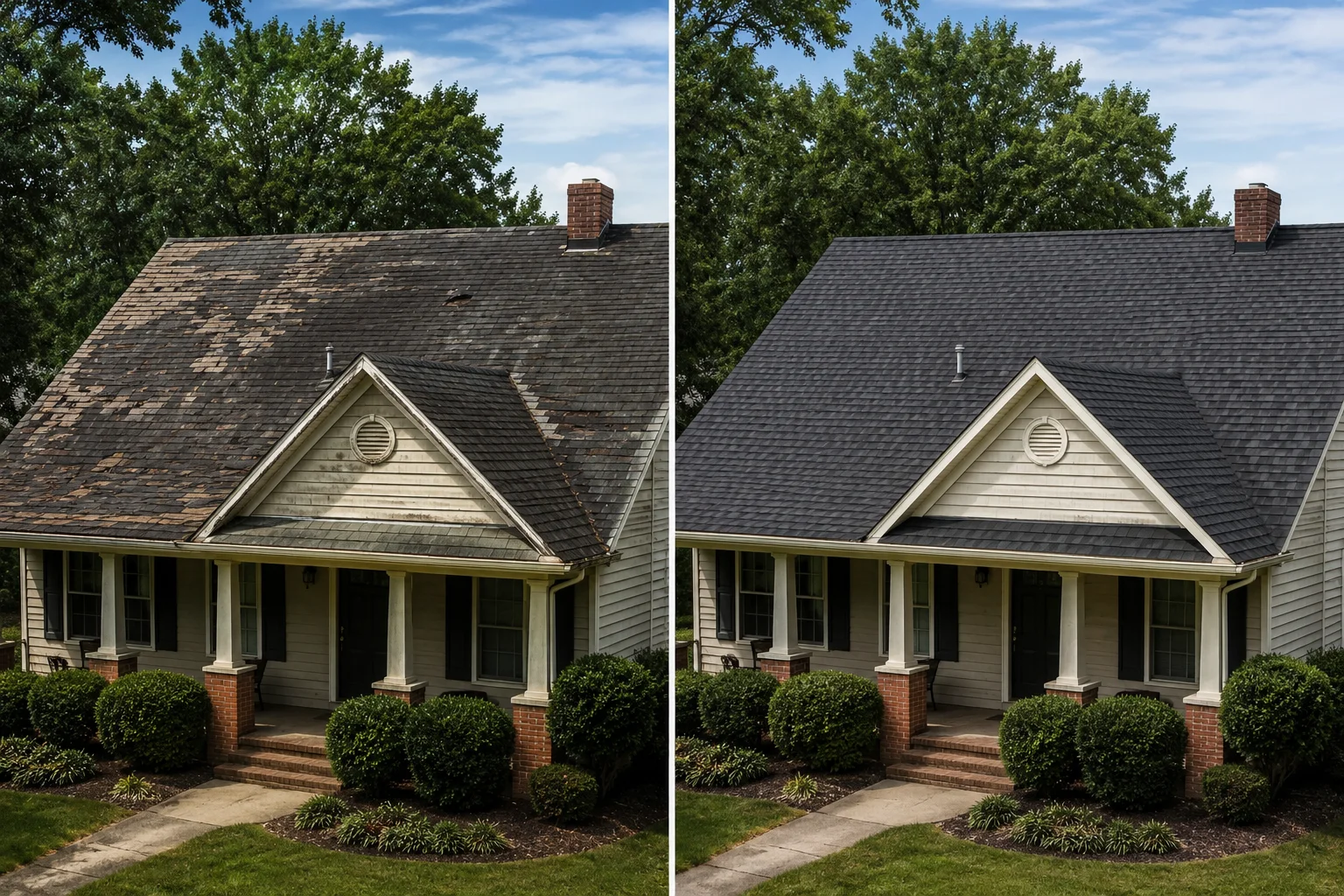
Residential roofing example in Falls Church, VA
Falls Church Residential Roofing

Residential Roofing in Falls Church, VA for the Roof Over Your Home

Residential roofing isn’t one service.

A homeowner may need one failed flashing detail repaired, a professional opinion on an aging roof, a complete replacement, or help deciding whether a problem is limited to one section of the house.

SummitShield Roofing provides residential roofing in Falls Church, VA for single-family homes and other residential properties throughout the area. We evaluate the roof that is actually on the house, explain the condition and help the homeowner move into the appropriate roofing service without automatically turning every problem into a replacement project.

Our residential work is backed by Virginia Class A contractor licensing, full insurance coverage, trained roofing crews, manufacturer credentials and documented workmanship standards.

Start Here

Start With What Is Happening on Your Roof

Most homeowners don’t call a roofer with a technical diagnosis.

They call because something changed.

You may have noticed water inside, shingles on the ground, an aging roof, a questionable repair, visible wear, storm damage or simply a roof you’re no longer confident in.

That’s enough to start.

The roofing service should follow the condition rather than requiring you to choose the right service before anyone has looked at the roof.

You Have a Specific Roof Problem

If a leak, damaged shingle, flashing issue, pipe boot or another defect appears limited to one area, the first question is whether the surrounding roofing is still suitable for a durable repair.

A serviceable roof shouldn't be replaced simply because one component failed.

Our roof repair services page

The Whole Roof Is Becoming the Concern

Repeated leaks, widespread deterioration, multiple previous repairs or roofing that has become difficult to work into can change the decision.

At that point, the homeowner isn't really evaluating one defect anymore. The question is whether continuing to repair the existing system still makes sense.

Our roof replacement services page

You Aren't Sure What the Roof Needs

You don't have to decide between repair and replacement from the driveway.

When the condition isn’t obvious, the useful next step is to establish what is happening before discussing a larger project.

That distinction is important because residential roofing decisions can change substantially depending on whether the problem is one failed detail or a pattern affecting several parts of the roof.

Every Roof Is Different

Falls Church Homes Can Put Very Different Demands on a Roof

Two houses with similar square footage can have very different roofing needs.

A straightforward gable roof with open access isn’t the same roofing project as a house with dormers, valleys, chimneys, additions and several intersecting roof planes.

Falls Church includes homes that have been expanded or altered over time. On those properties, the roofing may include sections built during different projects rather than one uniform assembly. That can create conditions such as:

  • 1an older main roof tied into a newer addition
  • 2dormers with several roof-to-wall intersections
  • 3multiple valleys carrying concentrated runoff
  • 4chimneys and plumbing penetrations
  • 5porches or additions with lower roof pitches
  • 6roof sections that have been repaired or reroofed at different times

The right residential roofing scope has to account for those relationships instead of treating the house as one flat number of roofing squares.

Additions

The Roof Over an Addition Deserves Its Own Look

Additions are a common place for residential roofing to become more complicated.

The issue isn’t necessarily that the addition was built poorly.

It’s that a new roof section has to connect to something that was already there.

That connection can introduce:

  • 1roof-to-wall flashing
  • 2pitch changes
  • 3valleys
  • 4new drainage paths
  • 5different ventilation spaces
  • 6transitions between roofing materials or installation periods
Tree Cover

Tree Cover Changes What Homeowners See From the Ground

Mature trees are part of many Northern Virginia properties, but they can make roof conditions harder to evaluate from below.

Tree cover can obscure rear roof planes and sections behind dormers or additions. Leaves and small debris can also collect in valleys and drainage areas, while branches may contact roofing or create localized damage during storms.

That doesn’t mean a tree-covered house automatically has a roofing problem.

It means the roof should be evaluated as the actual property exists rather than from a generic residential checklist.

The Whole System

Residential Roofing Is More Than the Visible Shingles

Most homeowners naturally focus on the material they can see.

But residential roof performance also depends on the details surrounding that material. Depending on the roofing system and project, relevant components can include:

  • 1roof decking or sheathing
  • 2underlayment
  • 3starter materials
  • 4shingles or another primary roof covering
  • 5flashing
  • 6pipe boots and penetrations
  • 7drip edge
  • 8valleys
  • 9ridge and hip components
  • 10attic ventilation

Those components don’t all need to be replaced every time a roofer visits.

They do need to be understood when they affect the problem or project being evaluated.

A leaking pipe boot, for example, is not the same roofing problem as widespread shingle deterioration.

That distinction is what keeps a residential recommendation proportionate to the condition.

Material Fit

Roofing Materials Should Fit the House, Not Just the Sample Board

For many residential projects, material choice becomes part of the conversation.

The roof has to fit the home’s architecture, roof pitch, project goals and the way the roofing system will be assembled.

SummitShield works with manufacturer-backed roofing systems and products associated with GAF, Owens Corning and CertainTeed.

For a homeowner, useful material considerations can include:

  • 1compatibility with the roof design
  • 2appearance on the home
  • 3system components
  • 4manufacturer installation requirements
  • 5applicable warranty options
  • 6how different roof sections need to be treated

This residential page stays at the property-type level.

If selecting the roof system itself is your main question, review our guide to roofing materials and options for the deeper comparison.

Working Around Your Home

A Residential Roofing Project Happens Around Your Home, Not on an Empty Jobsite

For a homeowner, the work doesn’t happen in isolation.

Cars may need to move. Landscaping surrounds the house. Children or pets may be home. Driveways and walkways still need to be considered. Roofing material and debris have to move through a property that remains someone’s home.

That changes how a residential roofing project should be managed. Before larger roofing work begins, SummitShield considers:

Access Around the House

The crew needs practical access for materials, equipment and debris removal.

Tight side yards, fences, additions and landscaping can all affect how the project is staged.

Protection Below the Roofline

Removing or handling roofing materials creates activity around the entire perimeter of the home.

Landscaping, siding, windows, patios, walkways and driveways need to be considered before work starts rather than after debris begins coming off the roof.

What Is Happening Inside the Home

For some projects, attic access or interior moisture evidence may matter.

Knowing where a leak appeared or what the homeowner has already observed can help connect the exterior roof condition to what is happening inside.

Cleanup Before the Crew Leaves

Residential cleanup is part of the roofing job.

The property should not feel like a construction site indefinitely because the roof work has been completed.

SummitShield includes professional project cleanup and a final walkthrough as part of appropriate residential project completion.

Before You Approve

What Homeowners Should Expect Before Approving Roofing Work

You should understand why work is being recommended before you approve it.

For a residential project, that means connecting the proposed roofing work to the condition of the house. A useful conversation should answer:

What did you find?
Not simply "the roof is bad," but the actual condition and affected area.
Is the problem localized or widespread?
That distinction often determines whether the conversation stays with repair or moves toward replacement.
What exactly are you proposing?
A written scope should make the work clear enough that you understand what you’re buying.
Are there conditions that can't be confirmed yet?
Some decking conditions, for example, may remain concealed until roofing is opened during larger work.
Which roofing components are part of the scope?
The visible roof covering shouldn't be the only detail explained.
How will the property be managed during the work?
Access, protection, debris and cleanup matter on a residential site.

A homeowner should be able to understand the proposal without having to become a roofer first.

Documentation

Residential Roof Work Should Be Documented Where It Matters

Roofing is difficult for a homeowner to evaluate because much of the work takes place out of sight.

Photo documentation helps close that gap. Depending on the project, useful photographs can show:

  • 1the condition that led to the recommendation
  • 2a failed flashing or penetration detail
  • 3damaged shingles
  • 4visible decking conditions
  • 5installation details before they are covered
  • 6completed transitions
  • 7the finished roof

The purpose isn’t to create a large photo report for every minor job.

It’s to document the conditions and workmanship that matter to the homeowner’s decision.

See the Work

Look at Residential Projects, Not Just Product Samples

A shingle sample tells you what a roofing material looks like in your hand.

A completed project shows what the roof looks like on a house.

It can also show how a contractor handled roof geometry, valleys, dormers, ridges and transitions that are more relevant to workmanship than color alone.

Before choosing a contractor for a larger residential project, you can see residential roofing projects completed by SummitShield.

Project evidence is especially useful when your own home has a more complex roofline.

Trust Signals

Trust Signals That Matter to a Homeowner

Residential roofing requires allowing a crew to work on and around one of your largest assets.

The qualifications behind that work should therefore answer practical homeowner concerns.

SummitShield Roofing operates as a Virginia Class A licensed and fully insured roofing contractor, with general liability and workers’ compensation coverage.

These qualifications are not a substitute for evaluating the roof. They support the way the evaluation and roofing work are carried out.

Find Your Path

How to Choose the Right Residential Roofing Path

You don’t need to browse every service page before speaking with a roofer. Start with what you know:

What you’re seeing or planningBest starting point
Leak or one damaged roofing areaRoof repair
Missing or damaged shinglesRoof repair assessment
Roof condition is unclearProfessional evaluation
Repeated problems in several areasBroader roof assessment
Aging roof and considering a full reroofRoof replacement
Selecting a roof system for a larger projectRoofing materials
Comparing contractor workmanshipResidential project examples

The purpose of this page is to make that routing easier.

SummitShield provides residential work as part of our broader role as a Falls Church roofing company, while the individual service pages explain each project type in depth.

Residential Roofing FAQs

Residential Roofing FAQs for Falls Church, VA

What type of roofing work does SummitShield provide for Falls Church homeowners?

SummitShield handles residential roofing needs ranging from localized roof problems to complete reroofing and professional roof-condition evaluation.

The exact service depends on what is happening with the roof rather than using one project type for every homeowner.

Do I need to know whether my roof needs repair or replacement before calling?

No.

Describe what you’re seeing and what concerns you.

A localized problem with serviceable surrounding roofing may remain a repair. Repeated or widespread deterioration may justify a broader replacement discussion.

The condition should determine the recommendation.

Can different parts of my house need different roofing approaches?

Yes.

Homes with additions, porches, dormers or sections built at different times can have different roof pitches, transitions or roofing conditions.

A lower-slope addition, for example, may need to be evaluated differently from the steeper main roof.

What should I compare when choosing a residential roofer?

Compare more than the total price.

Look at licensing and insurance, the written scope, how the contractor explains the roof condition, which roofing components are included, property-protection procedures, project documentation, workmanship standards and completed residential work.

Can SummitShield work on an older Falls Church home with additions?

Yes.

Older and modified homes can require additional attention at dormers, chimneys, valleys, roof-to-wall connections and areas where additions meet the original structure.

The scope should be based on how those roof sections are actually assembled.

Talk With Our Roofing Team About Your Home

Speak With SummitShield About Your Falls Church Home

You don’t need to have the roofing terminology figured out before you call.

Tell SummitShield Roofing what’s happening with your home, what you’ve noticed and what question you’re trying to answer.

We’ll help identify the appropriate residential roofing path and explain what should happen next.

Direct Roofing Hotline

(833) 754-0319

Serving Falls Church, Arlington, Fairfax, McLean, Vienna, Alexandria, and Northern Virginia.

Call Now
Call a RooferTalk to a Roofer