Licensed & Insured Roofing Contractor
Call (833) 754-0319
SummitShield Roofing
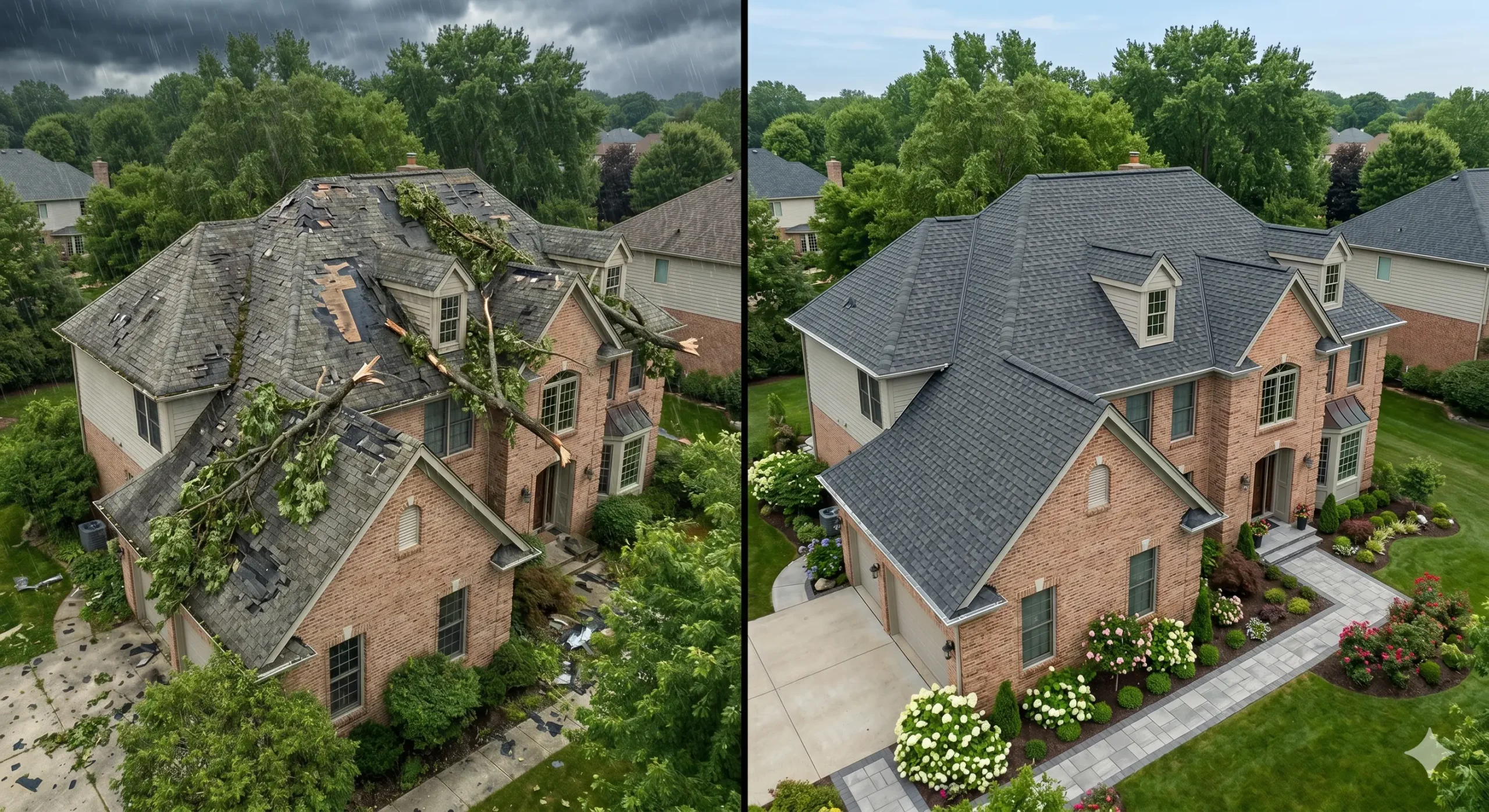
Before and after roof repair example in Falls Church, VA
Falls Church Roof Repair

Roof Repair in Falls Church, VA for Leaks & Localized Damage

If your roof is leaking, shingles have come loose, flashing has failed or one area of the roof has been damaged, the first question is whether the problem can be corrected without replacing an otherwise serviceable roof.

SummitShield Roofing provides roof repair in Falls Church, VA for localized roofing problems including leaks, damaged or missing shingles, flashing failures, deteriorated pipe boots, vulnerable roof penetrations and other repairable defects.

The repair starts with finding the condition responsible for the problem. We don’t base a repair on the ceiling stain alone or assume every leak means you need a new roof.

Once the source and surrounding roof condition are understood, we explain what needs to be repaired, what can remain in place and whether there is anything that makes a localized repair impractical.

Roof Problems We Repair

Roof Problems We Repair in Falls Church

Roof repairs work best when there is a defined defect and the surrounding roofing still provides a suitable system to repair into. Common repair calls include:

01

Roof Leak Repair

Water inside the house tells us there is a moisture problem, but it doesn't always identify where the roof is failing.

Water can move along decking, framing or other surfaces before becoming visible inside. The repair therefore needs to address the exterior entry point, not simply the location of the interior stain.

We repair localized leak conditions when the source can be isolated and the surrounding roof can support a durable correction.

02

Missing, Loose or Damaged Shingles

Wind, impact and normal material deterioration can leave individual shingles cracked, displaced or missing.

A shingle repair involves more than covering the exposed area. We also consider how the replacement material will tie into the existing courses, whether surrounding shingles can be worked without causing additional damage and whether the underlying area shows signs of water intrusion.

03

Flashing Repairs

Many roof leaks occur at transitions rather than in the open field of shingles.

Roof-to-wall intersections, chimneys and other transitions depend on flashing to direct water back onto the roof surface. When flashing is loose, damaged, improperly integrated or deteriorated, simply applying more sealant may not correct the underlying detail.

A proper flashing repair addresses how water is supposed to move through that part of the roof.

04

Pipe Boots and Roof Penetrations

Plumbing vents and other penetrations create openings through the roofing system.

The boot or flashing surrounding a penetration can crack, separate or deteriorate while the surrounding shingles remain serviceable. In those cases, a focused repair may restore the detail without disturbing a larger portion of the roof.

05

Valley and Transition Repairs

Valleys and intersecting roof planes carry concentrated water flow.

When a problem is isolated to damaged material, poor integration or a specific transition, repair may be possible. The scope depends on whether the surrounding materials can be opened and tied back together correctly.

06

Localized Decking Damage

When moisture has affected a small section of roof decking or sheathing, the damaged portion may need to be removed and replaced as part of the repair.

The important distinction is whether the deterioration is limited to the repair area or evidence of a broader roof-system problem.

If you’re trying to understand the problem before scheduling service, our guide to the common causes of roof leaks covers that topic in more depth.

Patch vs. Repair

The Difference Between Patching a Leak and Repairing the Roof

A quick patch can stop visible water temporarily without correcting why the water entered.

That’s an important distinction.

Roof cement, caulk and exposed sealants can be appropriate in specific details or temporary situations, but they shouldn’t be used as a substitute for missing flashing, failed materials or a properly integrated repair.

Our repair work is based on three questions:

  • 1Where is water getting into the roofing system?
  • 2What failed at that location?
  • 3Can the failed area be repaired into the surrounding roof in a way that is mechanically sound and sheds water correctly?

That last question matters.

If the surrounding shingles are severely deteriorated, brittle or no longer workable, forcing a small repair into them can create additional damage. Likewise, repairing one visible symptom doesn’t make sense when the surrounding roof has widespread failure.

The goal isn’t to make the repair area look covered. It’s to restore the water-shedding detail that failed.

Before Defining the Scope

How We Diagnose a Roof Repair Before Defining the Scope

For a repair call, we focus the evaluation on the problem you’re experiencing and the roof areas most likely to be connected to it. That may include checking:

  • 1the visible damaged area
  • 2shingles around the suspected repair
  • 3roof-to-wall and chimney flashing
  • 4pipe boots and other penetrations
  • 5valleys and adjoining roof planes
  • 6accessible decking or sheathing conditions
  • 7previous repair materials
  • 8drainage patterns around the problem area
  • 9interior or attic evidence when it helps trace water entry

One field detail matters especially with leaks: the inside stain and the outside failure don’t always line up vertically.

Water may enter higher on the roof and travel before appearing inside. That is why repairing only the shingles directly above a ceiling stain can miss the actual failure.

When the roof’s overall condition is unclear rather than tied to a specific repair request, you can schedule a roof inspection instead.

Defining the Scope

What Happens After We Find the Problem?

A useful repair recommendation should tell you exactly what is being corrected.

Depending on the condition, a repair scope may involve removing affected roofing, replacing damaged material, correcting flashing, replacing a failed pipe boot, repairing a small section of decking or rebuilding a localized transition.

The exact materials and sequence depend on the roof.

For example, replacing one damaged shingle is different from repairing a roof-to-wall flashing detail. The second repair may require carefully opening enough surrounding roofing to access the flashing and then tying the repaired assembly back into the existing system.

We document relevant conditions and explain the proposed work so you understand what the repair is intended to correct.

Workmanship

Repairing the Roof Without Creating Another Problem

Localized roof repair often means working with existing material rather than starting with an open roof deck.

That makes workmanship at the repair boundary especially important.

Our crews pay attention to how the repair integrates with the surrounding system, including:

  • 1proper shingle course alignment
  • 2correct fastening where roofing is replaced
  • 3sealing exposed or disturbed fastener locations where appropriate
  • 4flashing integration
  • 5underlayment condition when exposed
  • 6water flow through valleys and transitions
  • 7secure treatment around roof penetrations

The repaired area needs to work with the existing roof, not simply sit on top of it.

For asphalt-shingle repairs, we also consider the condition of the surrounding shingles before lifting or manipulating them. Material that has become fragile with age may not tolerate the same handling as newer roofing.

That can affect whether a small repair is technically reasonable.

Complex Rooflines

Roof Repair for Falls Church Homes With Additions and Complex Rooflines

Some Falls Church properties have roof sections built at different times.

An older main roof may connect to a later addition, porch, dormer or lower-slope section. These intersections can create repair conditions where two roof geometries or roofing systems meet.

Tree-covered properties can add another variable. Falling limbs may create obvious damage, while leaves and small debris can slow drainage in valleys and around transitions.

For these roofs, the repair needs to account for how the affected section connects to the rest of the structure, not just the visibly damaged material.

SummitShield provides specialized repairs as part of our broader Falls Church roofing services, while this page remains focused specifically on repairable roof problems.

Repair or Replace?

When a Roof Repair Makes Sense — and When It Doesn’t

We don’t treat replacement as the automatic answer to every roof problem. Repair is often reasonable when:

Roof conditionRepair outlook
Damage is limited to a defined areaOften a good repair candidate
A pipe boot or penetration detail has failedFrequently repairable
A small number of shingles are damagedMay be repairable if surrounding shingles remain workable
Flashing failure is localizedRepair may be practical if the surrounding assembly can be opened and restored
A small decking area is damagedMay be included in a localized repair
Problems appear across multiple roof areasBroader evaluation is needed
Existing shingles are too deteriorated to work around safelyLocalized repair may no longer be practical
Leaks continue from multiple unrelated areasRepair may no longer provide good value

The question isn’t simply “Can something be patched?”

It’s whether the repair is likely to function properly within the condition of the existing roof.

When that decision isn’t straightforward, our guide on whether to repair or replace your roof explains the broader decision separately.

Written Estimates

What You Should Expect From a Roof Repair Estimate

A repair estimate should give you more than a dollar amount. You should understand:

  • 1what problem was identified
  • 2where the repair will be performed
  • 3what roofing components are involved
  • 4what material is expected to be removed or replaced
  • 5whether decking or another concealed condition could affect the scope
  • 6how the repair connects to the existing roofing
  • 7what the proposed work is intended to solve

SummitShield Roofing provides a written repair scope based on the roof condition and the work being proposed.

This is especially important when comparing roof repair companies. Two estimates can use the same word — “repair” — while describing very different work.

Documentation

Roof Repair Work You Can Evaluate

Repair quality isn’t always easy to judge from the ground, which makes documentation useful.

Photos can show the original condition, the area opened during the repair and the completed roofing detail. That gives the property owner a clearer record of what was found and what was corrected.

We use photo documentation where it helps communicate relevant roof conditions and project work.

You can also see completed repair projects and other SummitShield roofing work to understand how we approach real properties.

Why SummitShield

Why Homeowners Choose SummitShield for Roof Repairs

For a roof repair, the trust signals that matter most are the ones connected to diagnosis and workmanship.

SummitShield Roofing is a Virginia Class A licensed and fully insured roofing contractor serving Falls Church and Northern Virginia.

The objective is straightforward: identify the repairable condition, explain the scope clearly and complete the work without unnecessarily expanding the project.

Roof Repair FAQs

Roof Repair FAQs for Falls Church, VA

Who repairs roof leaks in Falls Church?

SummitShield Roofing provides professional roof leak repair in Falls Church for localized problems involving shingles, flashing, pipe boots, penetrations, valleys and other repairable roofing defects.

The first step is determining where water is actually entering and whether the surrounding roof remains suitable for repair.

Can my roof be repaired instead of replaced?

Often, yes.

A roof is usually a stronger repair candidate when the problem is localized and the surrounding roofing remains serviceable. If damage is widespread, repairs are recurring or the existing materials can no longer be worked reliably, replacement may become the more practical option.

Can you repair a roof leak if I only know where the ceiling is stained?

Yes. An interior stain gives us useful information, but it doesn’t necessarily identify the exact exterior failure.

Water can travel along decking or framing before becoming visible. The roof side of the problem still needs to be traced before defining the repair.

Can damaged flashing be repaired without replacing the whole roof?

Localized flashing problems can often be repaired when the surrounding roofing can be opened, the failed detail accessed and the assembly restored correctly.

The condition of adjacent shingles and the type of flashing detail determine the practical repair scope.

What if you find damaged decking during the repair?

If a localized section of decking is deteriorated, that area may need to be replaced before the roof covering can be restored.

If the damage extends well beyond the expected repair area, we explain the condition before treating it as a larger project.

Talk to a Roofer About Your Roof

Speak With SummitShield About Your Falls Church Roof Repair

You don’t need to know whether the problem is a shingle, flashing, pipe boot, valley or something underneath the roofing before calling.

Tell us what you’re seeing: a stain, missing shingles, visible damage, an old repair that has failed or a problem another contractor has identified.

Speak with SummitShield Roofing about your Falls Church roof repair, leak or damaged roofing.

Direct Roofing Hotline

(833) 754-0319

Serving Falls Church, Arlington, Fairfax, McLean, Vienna, Alexandria, and Northern Virginia.

Call Now
Call a RooferTalk to a Roofer