Licensed & Insured Roofing Contractor
Call (833) 754-0319
SummitShield Roofing
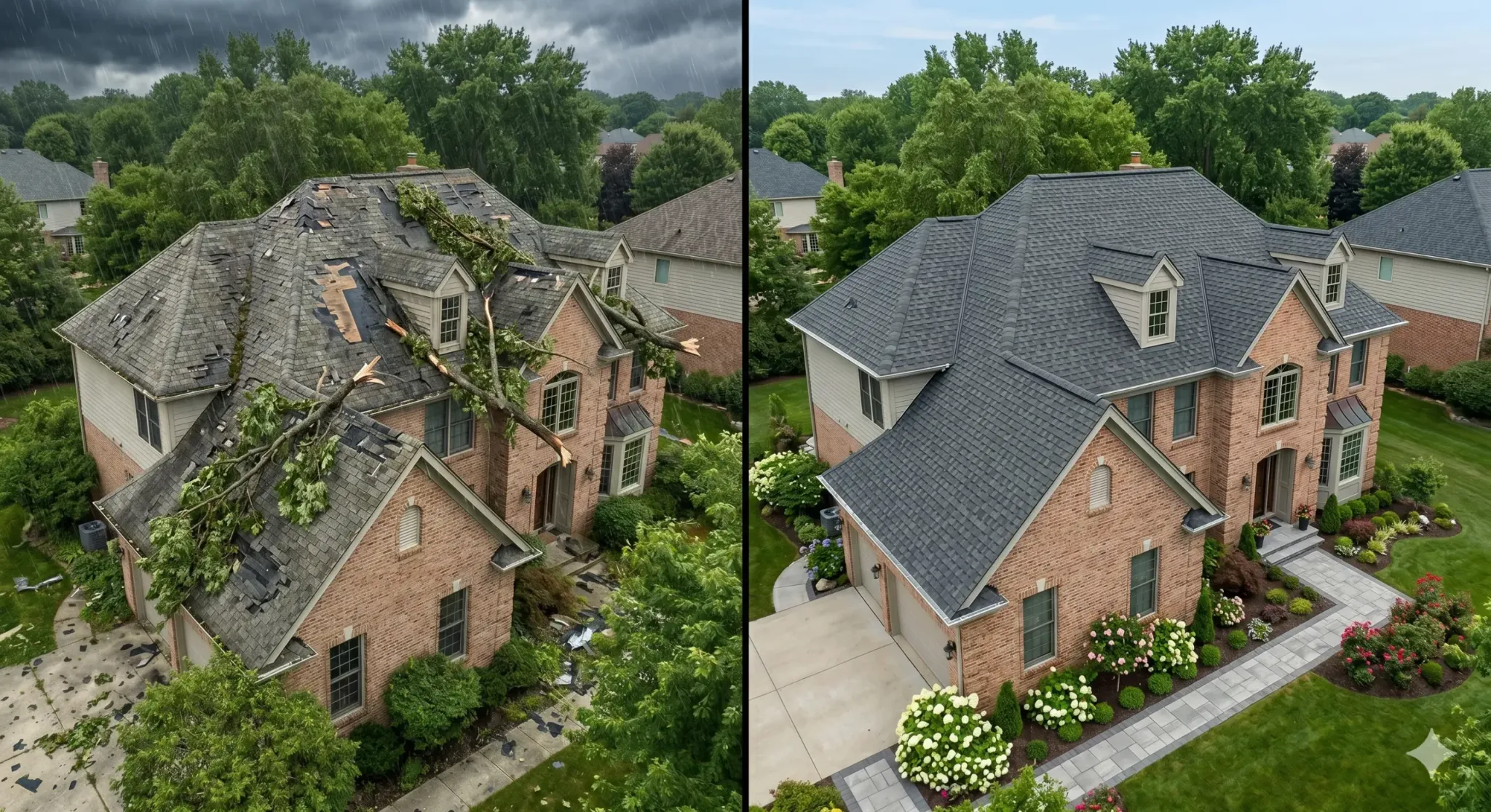
Roof leak source example in Falls Church, VA
Falls Church Roof Leaks

Why Is My Roof Leaking? Common Roof Leak Sources and What They Mean

If your roof is leaking, the source is usually a failure somewhere in the roof’s water-shedding path: damaged roofing, deteriorated or improperly detailed flashing, a failed pipe boot or penetration, a valley problem, a skylight transition, drainage interference, or damage caused by wind, hail or debris.

But the wet spot on your ceiling may not be directly below that failure. Water can enter at one point and travel along the roof deck, framing or another surface before it finally drips into the room below.

That is why finding a stain is only the beginning of leak diagnosis.

The useful question is not “Where is the ceiling wet?” It is: “Where did water first get through the roofing system?”

Common Sources

The Most Common Roof Leak Sources

Possible sourceWhy water can enterCommon clue
FlashingJoint or transition no longer directs water properlyLeak near chimney, wall, dormer or roof transition
Pipe boot / vent penetrationCollar or flashing deteriorates or becomes damagedStaining near a plumbing vent location
ValleyConcentrated runoff finds a defect in a critical drainage pathLeak below intersecting roof planes
Damaged shinglesCracks, missing material or displacement exposes the system belowLeak after wind or visible shingle damage
Skylight transitionFlashing or surrounding roof detail allows water entryMoisture around skylight opening
Drainage obstructionWater is redirected or backs up where it should drain freelyOverflow or moisture after heavy rainfall
Storm damageWind, hail or debris damages roofing or flashingNew problem following severe weather
Ice / water backupWater is forced beneath roofing near vulnerable areasWinter or thaw-related leakage
Non-roof moistureCondensation or another building source mimics a roof leakDampness not consistently tied to rainfall
1. Flashing

Flashing Is Often Where a Roof Becomes Complicated

Large uninterrupted roof planes are relatively straightforward: water travels down the shingles toward the eaves.

Leaks become more complicated where that simple path is interrupted. That is where flashing comes in.

Roof flashing is typically installed where:

  • 1a roof meets a wall
  • 2a chimney passes through the roof
  • 3a dormer intersects another roof plane
  • 4a vent or other penetration passes through the decking
  • 5two roof sections meet
  • 6a skylight interrupts the roofing surface

Flashing is the material that guides water away from joints, penetrations and intersections where water could otherwise enter the building.

A Flashing Leak May Be a Detail Problem, Not a Shingle Problem

Suppose the shingles surrounding a chimney look reasonably intact. Water is still appearing after rain.

Replacing random shingles around the area may accomplish nothing if the real failure is at the roof-to-chimney flashing.

The same principle applies at wall intersections and dormers. Roof covering can look acceptable while the transition detail is leaking.

2. Pipe Boots

Pipe Boots and Plumbing Vent Penetrations Are Small but Vulnerable

A plumbing vent creates a deliberate opening through the roof.

The pipe itself isn’t necessarily the problem. The vulnerable area is the connection between the pipe and roofing system.

A pipe boot or vent flashing is designed to protect that penetration. Vent-pipe leaks commonly result from damaged, deteriorated or improperly installed collars or flashing.

A leak in this area can result from deteriorated flashing, a damaged collar, debris impact, improper installation, or a failed seal around the penetration.

Why Caulk Alone Is Not a Reliable Diagnosis

Seeing sealant around a leaking penetration can make the problem look simple.

But adding more sealant does not answer whether the flashing itself is correctly integrated, whether surrounding shingles are damaged, whether the boot has deteriorated, or whether water is entering higher up and merely appearing near the pipe.

Relying on shingles cut around a vent pipe with caulk at the joint can leave a vulnerable detail as the sealant ages and cracks.

The correct diagnosis starts with the assembly, not with a tube of roof cement.

3. Valleys

Roof Valleys Carry More Water Than an Ordinary Roof Plane

A valley is the channel formed where two sloping roof planes meet.

Instead of shedding only the rain that falls directly onto one small area, a valley receives runoff from both adjoining roof planes.

That concentration makes valley detailing important. Water from both roof planes converges there and has to be directed safely off the roof.

Valley leakage can be associated with damage within the valley, deteriorated roofing, flashing problems, installation defects, debris interfering with drainage, or damage near the intersection of roof planes.

The Leak May Appear Beside the Valley, Not Directly Under Its Centerline

Once water gets below the finished roofing, gravity and framing determine where it travels next.

So an interior stain located several feet away from a visible valley does not eliminate the valley as a possible source.

4. Damaged Shingles

Damaged or Missing Shingles Can Open a Water Path

Shingles form the primary weather-facing layer on many Falls Church homes.

When shingles crack, lift, tear or disappear, the roofing assembly beneath them can become more exposed to moisture.

Possible triggers include aging and deterioration, wind, hail, falling branches, physical damage, and installation problems.

But one damaged shingle should not automatically be blamed for every nearby ceiling stain.

A good diagnosis asks: Is this shingle defect actually connected to the observed water path?

5. Skylights

Skylights Create Several Places Where Water Has to Be Managed Correctly

A skylight interrupts the normal flow of the roof covering.

Water has to be directed around the opening and back onto the roof surface below it. That makes the surrounding flashing critical.

Moisture appearing near a skylight can therefore involve surrounding flashing, adjacent roofing, the skylight assembly, or water entering farther upslope and traveling toward the opening.

The presence of moisture beside a skylight does not, by itself, identify which one failed.

6. Drainage Problems

Drainage Problems Can Redirect Water Toward Areas Not Designed to Hold It

Water should move from the roof surface toward the drainage system and away from the building.

Debris can interfere with that path. Clogged gutters can redirect water beneath shingles and through the roof deck.

On a more complex roof, leaves and debris can also collect around valleys and transitions.

That matters because the resulting symptom can look like a roofing-material failure when the actual problem involves how water is being routed.

Heavy Rain Is a Clue

Heavy Rain Is Useful Diagnostic Information

If a leak appears only during prolonged or particularly heavy rainfall, tell the roofer.

Do not simply say: “The roof leaks sometimes.”

A better description is: “It leaks only after several hours of rain,” or “It appears during hard rain but not during light rain.”

The timing helps establish what conditions are required before water enters.

7. Wind-Driven Rain

Wind-Driven Rain Can Reach Roof Details Differently

Rain does not always fall straight down.

During wind, water can be driven toward vertical walls, flashing, transitions and roof details from directions they don’t experience during an ordinary shower.

Specialized leak barriers are used at vulnerable areas specifically to help protect against wind-driven rain, including valleys, eaves, rakes, chimneys and other transitions.

That creates a useful diagnostic clue: leak during ordinary rain and wind-driven rain → one pattern. Leak only when rain is blowing from a particular direction → potentially another.

8. Storm-Triggered Leaks

A Leak That Started After a Storm Needs Event-Specific Evaluation

If the roof was dry before a significant weather event and began leaking immediately afterward, the timing matters.

Strong wind can lift or distort shingles. Hail and falling debris can damage roofing materials or flashing.

Still, the fact that a storm occurred does not prove every roof defect was storm-caused. An older flashing problem can also become obvious during the same rainfall.

The assessment should separate what existed before from what the event actually changed.

When the question is specifically whether wind, hail or impact damaged the roof, see storm-damage roof repair rather than treating this general leak guide as a storm-damage diagnosis.

9. Previous Repairs

Previous Repairs Can Become Leak Sources Too

A roof leak can originate where someone already tried to solve a different leak.

That may happen around patched shingles, repaired flashing, penetrations, transition details, or sealant-heavy repair areas.

The presence of a previous repair does not mean it was performed incorrectly. It does mean the area deserves context.

A roofer diagnosing a repeat leak should ask:

  • 1What was repaired?
  • 2Why was it repaired?
  • 3Did the same symptom return?
  • 4Is the new stain in the same place?
  • 5Was only the visible symptom addressed, or was the original water-entry point identified?

Repeat failures often require revisiting the original diagnosis rather than simply repeating the same treatment.

10. Non-Roof Moisture

Sometimes the Moisture Isn’t Coming Through the Roof Covering

Not every wet ceiling or damp roof deck is proof of an exterior roof leak.

Attic moisture can also involve condensation or another building-moisture source. Attic ventilation helps manage heat and moisture as part of moisture control below the roof covering.

This distinction is especially important when moisture appears without rainfall, develops under certain indoor conditions, or is distributed differently from a typical water-entry path.

A roofer should not begin tearing apart shingles until there is evidence that exterior water intrusion is actually the cause.

Where the Stain Isn’t

Why the Ceiling Stain May Not Be Where the Roof Is Leaking

This is one of the most useful things to understand about roof leaks.

Water follows available paths. After entering the roofing assembly, it may travel along the underside of decking, along framing, around a penetration, or across another surface before reaching insulation or drywall.

Water can travel and make the origin of a roof leak difficult to identify.

So: ceiling stain = where water became visible — not necessarily roof leak = directly above stain.

This is why replacing shingles directly over an interior stain without tracing the source can fail to solve the problem.

Timing Is a Clue

The Rain Pattern Can Tell You More Than the Size of the Stain

When we investigate leaks, when the problem occurs can be as useful as where it appears.

What you observeDiagnostic clue
Leaks almost immediately whenever rain beginsA relatively direct water path may exist
Appears only after long rainfallWater may need time to accumulate or travel
Happens only with strong windWind-driven water may be reaching a vulnerable transition
Appeared directly after a stormNew roofing or flashing damage deserves evaluation
Happens during winter thawWater-backup or ice-related conditions may be involved
Moisture appears with no rainExterior leakage may not be the only explanation
Same stain returns after previous repairOriginal source may remain or another connected path may exist

These clues do not diagnose the roof by themselves. They help determine where the investigation should begin.

Homes With Additions

Falls Church Homes Can Have More Than One Roof System Meeting Together

Some Northern Virginia homes have changed over time.

An older main house may connect to a rear addition, dormers, a porch roof, a lower-slope section, a chimney, or multiple intersecting roof planes.

Each connection creates another transition where water has to be managed.

That means a leak near an addition doesn’t necessarily originate in the broad field of shingles above the room.

The more useful question may be: Where does the newer roof connect to the older roof or wall?

On these properties, geometry can matter more than simply identifying the nearest visible shingle.

Safe Steps

What You Can Safely Do When You Notice a Roof Leak

You can gather useful information without getting onto the roof.

Inside the House

If it is safe to do so:

  • 1protect belongings from dripping water
  • 2use a container to catch active dripping
  • 3note when the water started
  • 4photograph stains or damage
  • 5observe whether the stain changes during rain
  • 6look from a safely accessible attic area for visible moisture without walking on unsafe surfaces

If water is affecting electrical fixtures, wiring or electrical equipment, treat that as a separate safety concern. Water-damaged electrical equipment can create shock and fire hazards and should be evaluated by qualified electrical professionals.

Outside

Stay on the ground. From a safe location, you may be able to observe missing shingles, fallen branches, visibly displaced roofing, damaged vent components, overflowing drainage, or an obvious change after a storm.

Roof observation should be done from the ground as much as possible because ladders and rooftop access create safety risks; closer roof evaluation should be handled by properly equipped professionals.

Do not climb onto a wet or damaged roof to find the leak.

A Professional Diagnosis

What a Professional Leak Diagnosis Should Establish

The goal is not merely to find something on the roof that looks imperfect. The goal is to connect evidence. A useful professional assessment asks:

  • 1Where is water visible inside?
  • 2Under what weather conditions does it appear?
  • 3What roof geometry is above and upslope of that area?
  • 4Which flashing, penetrations, valleys or roof transitions exist nearby?
  • 5Is there visible exterior damage?
  • 6Can the moisture path be followed inside the attic?
  • 7Is the problem localized or part of broader roof deterioration?
  • 8Does the evidence support repair at a specific source?

That is the difference between leak diagnosis and guessing.

If the origin is unclear, schedule a roof inspection so the condition can be evaluated systematically.

Next Step

When a Leak Becomes a Roof-Repair Question

Once the water-entry source has been identified, the informational question has been answered.

The next question is: What needs to be corrected?

A localized condition may involve work at flashing, a pipe boot, shingles, a penetration, a valley, or another defined roof detail.

The scope should follow the diagnosed cause rather than the size of the stain inside.

For the actual repair service and what happens after diagnosis, see roof repair in Falls Church.

SummitShield’s broader Falls Church roofing services cover the next path when the issue turns out to be something other than a localized leak repair.

Roof Leak FAQs

Roof Leak FAQs

Why is water staining my ceiling if the roof looks fine?

A roof can leak at flashing, penetrations or other details without obvious missing shingles. Water can also enter at one location, travel along decking or framing and appear somewhere else on the ceiling.

Where do roof leaks commonly start?

Common source categories include damaged or deteriorated shingles, flashing around joints and penetrations, plumbing vent boots, valleys, skylight transitions, drainage problems and weather-related damage.

Why does my roof leak only during heavy rain?

Heavy or prolonged rainfall can expose a vulnerable water-management detail that may not leak under lighter conditions. Wind-driven rain can also reach flashing, valleys, chimneys and other roof transitions differently from ordinary rainfall.

The timing is useful diagnostic information, but the roof still needs to be evaluated to identify the actual entry point.

Why does my roof leak around a vent pipe?

The leak may involve the pipe boot, collar or flashing where the plumbing vent penetrates the roof. These penetrations are recognized leak-sensitive locations because the roof covering has to be sealed and flashed around an opening through the roof deck.

Can a roof leak come from a valley?

Yes.

Valleys collect runoff from two roof planes and have to channel that concentrated water off the roof. Damage or detailing problems in this area can create a water-entry path.

Talk to a Roofer About Your Roof

Speak With SummitShield About Your Falls Church Roof Leak

If water is getting inside, you don’t need to identify the failed component before calling. Tell SummitShield Roofing:

where you're seeing water; when it appears; whether wind or a storm was involved; whether the area has leaked before; whether previous repairs have been made.

Those details help narrow the investigation before the repair scope is decided.

Direct Roofing Hotline

(833) 754-0319

Serving Falls Church, Arlington, Fairfax, McLean, Vienna, Alexandria, and Northern Virginia.

Call Now
Call a RooferTalk to a Roofer