Licensed & Insured Roofing Contractor
Call (833) 754-0319
SummitShield Roofing
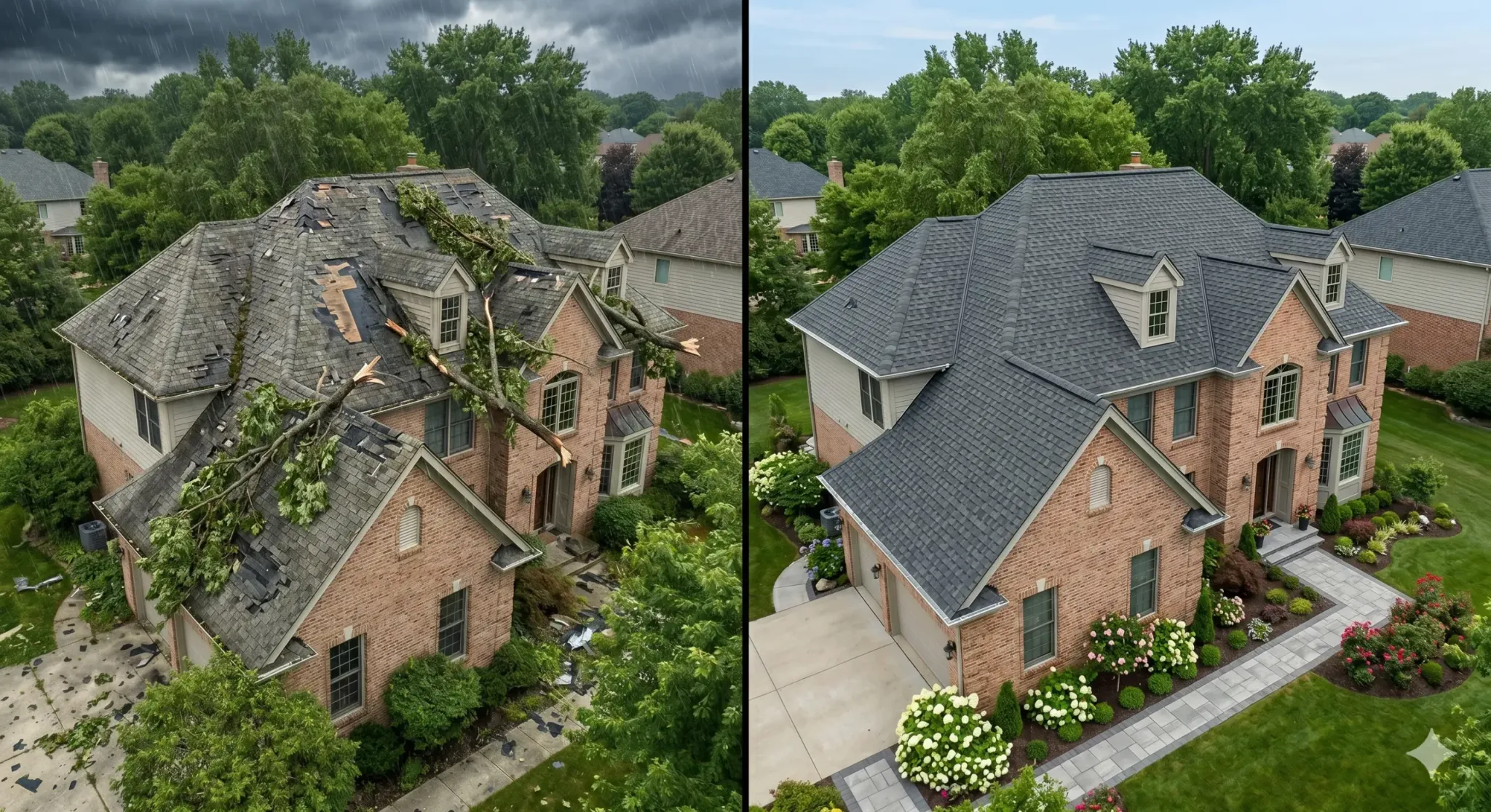
Roof repair vs replacement comparison example in Falls Church, VA
Falls Church Roofing Decision Guide

Roof Repair vs Replacement: How to Make the Right Call

Repair usually makes more sense when the problem is localized and the surrounding roof is still serviceable. Replacement becomes the stronger choice when deterioration or damage is widespread, leaks keep returning in different areas, or the existing roof can no longer support reliable repairs.

Roof age matters, but it should not make the decision by itself.

GAF’s homeowner guidance similarly distinguishes small, localized damage that may be repairable from significant or widespread problems that may call for replacement, while noting that material, climate and installation conditions affect each roof differently.

At SummitShield Roofing, we prefer to answer repair vs replacement by looking at the condition you have now, what has already been repaired and what the proposed repair is realistically expected to accomplish.

The right question isn’t “Is this roof old?” It is: “Does repairing this particular roof still make technical and financial sense?”

Start Here

Start With These Five Questions

When the repair-or-replace decision is close, five questions usually clarify it.

QuestionRepair leans stronger when…Replacement leans stronger when…
How much of the roof is affected?Damage is confined to one defined areaProblems appear across multiple areas or roof planes
What condition is the surrounding roofing in?Existing material can still be worked into reliablyShingles or roofing around the repair are heavily deteriorated
Has this roof been repaired before?This is an isolated failureDifferent areas keep requiring repairs
What is happening beneath the surface?Decking and supporting conditions appear soundMoisture or deterioration extends beyond a small area
What will the repair actually accomplish?It corrects a specific defect with useful service life around itIt mainly postpones a larger project that is already becoming necessary

No single row should decide the project alone. The pattern across all five is what matters.

When Repair Wins

When Roof Repair Is Usually the Better Choice

A roof does not need to be replaced every time it leaks.

A localized failure can exist on an otherwise serviceable roofing system. Examples include:

  • 1several damaged or missing shingles
  • 2one deteriorated pipe boot
  • 3a defined flashing problem
  • 4a limited roof-to-wall leak
  • 5localized wind damage
  • 6a small decking area affected by a known leak
  • 7one previous repair that needs correction

The important condition is what surrounds the problem.

If the adjacent roofing remains workable and the failed component can be opened, corrected and tied back into the existing system properly, repair may preserve the roof without turning a limited problem into a complete reroof.

Manufacturer guidance supports this basic distinction: localized roof damage may be suitable for repair when broader conditions do not justify full replacement.

If your roof clearly falls into this category, our dedicated roof repair in Falls Church page explains the repair service and workmanship in detail.

When Replacement Wins

When Replacement Starts Making More Sense

Replacement becomes easier to justify when the problem is no longer truly local. That can happen when:

  • 1leaks have developed in several unrelated areas
  • 2shingles are deteriorated across multiple roof planes
  • 3the roof has required repeated repairs
  • 4surrounding materials are too brittle or deteriorated to work into reliably
  • 5multiple flashing and penetration details are failing
  • 6moisture-related conditions extend beyond the expected repair
  • 7damaged decking is not confined to one small area
  • 8repairing one section leaves several other weak sections immediately behind it

At that point, another repair may solve today’s visible problem without solving the condition of the roof as a whole.

Replacement is generally the more comprehensive option where roofing problems are significant or widespread.

If inspection findings already support a full reroof, the dedicated roof replacement in Falls Church page covers that project separately.

Age Is Context, Not the Verdict

Roof Age Is Context — Not the Verdict

One of the easiest roofing mistakes is using age as a yes-or-no rule.

An older roof can still develop one repairable defect.

A younger roof can suffer extensive storm damage, installation problems or another condition that makes a larger project necessary.

Roof performance is affected by more than calendar age, including roofing material, installation, weather exposure and the conditions affecting the individual property.

So when someone says “The roof is 20 years old, so it has to be replaced,” there is still a missing question: What condition is it actually in?

Age becomes more meaningful when it appears alongside other evidence:

  • 1Older roof + isolated repairable failure + serviceable surrounding material → Repair may still be reasonable.
  • 2Older roof + repeated leaks + widespread deterioration → Replacement becomes considerably easier to justify.
  • 3Newer roof + isolated storm damage → Repair may be reasonable.
  • 4Newer roof + major widespread damage or serious installation failure → Age alone does not save it from a replacement discussion.
Repair History

Recurring Leaks Tell You More Than One Leak Does

One leak tells us that something failed.

Several unrelated leaks tell us something different.

Suppose a roof first leaks at a pipe boot. That detail is repaired. Two years later, water enters around a chimney. Then another roof plane develops a separate leak.

Each failure may have its own cause, but collectively they raise a bigger question: Are we still dealing with isolated defects, or are multiple parts of the roofing system reaching the point where continued repair is becoming inefficient?

Repair history therefore matters. A homeowner should keep track of:

  • 1where previous repairs were made
  • 2what was repaired
  • 3when the work was completed
  • 4whether the same location failed again
  • 5whether new leaks are appearing in different areas
  • 6how much has already been invested in keeping the roof serviceable

The decision is not simply about today’s repair bill. It’s about whether today’s repair is likely to remain an isolated expense.

Repairability

The Condition Around the Repair Matters as Much as the Damaged Spot

A roofer doesn’t perform a repair in a vacuum.

To replace shingles, rebuild flashing or correct another detail, existing roofing often has to be lifted, opened or otherwise worked into.

That creates an important repairability question: Can the surrounding material tolerate the work?

Newer, serviceable shingles generally provide a different repair environment from heavily weathered or brittle material.

A repair may look small on paper but become impractical if getting to the failed detail damages the roofing around it.

This is why “only five shingles are damaged” doesn’t always mean “replace only five shingles.” The condition of the shingles that must be disturbed to perform the repair also matters.

Decking

Decking Can Change the Decision

Shingles are not the entire roof.

Beneath them is the roof deck or sheathing, typically the structural wood substrate to which the roofing assembly is attached. Damaged portions of sheathing may need replacement during either repair or replacement work.

A small decking problem associated with one known leak can sometimes remain part of a localized repair.

Widespread moisture deterioration is different.

The more extensively the substrate is affected, the less meaningful it becomes to focus only on replacing the visible shingles directly above it.

That is one reason some repair-vs-replacement decisions cannot be finalized from photographs of the roof surface alone.

Interior Symptoms

A Ceiling Stain Doesn’t Tell You How Big the Roofing Problem Is

Interior water damage tells you moisture got where it shouldn’t.

It does not, by itself, tell you whether the roof needs a repair or replacement.

A stain can result from a relatively small flashing or penetration failure.

Water can also travel along decking, framing or other surfaces before becoming visible inside, so the interior symptom may not sit directly below the exterior entry point.

The roofing decision has to follow the source and extent of the failure.

One dramatic-looking interior stain can come from a repairable defect. At the same time, a roof with no current interior leak can still have widespread exterior deterioration.

That is why leak severity inside the room should not be used as the sole measure of roof condition.

Value, Not Just Price

The Financial Question Is About Value, Not Which Number Is Smaller

Repair is almost always the smaller immediate project.

That doesn’t automatically make it the cheaper decision over time.

Suppose a homeowner is choosing between a focused repair that addresses one defect on a generally sound roof, versus replacing that same serviceable roof simply to avoid any future repair. The focused repair may provide much better value.

Now change the facts: another significant repair on a roof that has already needed several unrelated repairs and has widespread deterioration, versus replacing a roof that is already approaching a whole-system failure point. The economics can reverse.

So instead of asking only “How much is the repair?” also ask:

  • 1What useful problem does this repair solve?
  • 2What condition will remain around it?
  • 3Is another major repair likely soon?
  • 4How much have I already spent on this roof?
  • 5Is this repair preserving useful service life or simply buying a short delay?
  • 6Would repairing this area complicate or duplicate work likely to happen during a near-term replacement?

The objective is not to create a universal percentage rule. It’s to determine whether the next dollar spent on the roof is solving the right problem.

Reading the Pattern

Repair History Can Reveal the Roof’s Direction

One previous repair is not necessarily concerning.

Roofs contain multiple components, and individual details can fail at different times.

What deserves more attention is a pattern such as: flashing repaired at one location, shingles repaired on another plane, another penetration begins leaking, more roofing material becomes difficult to work into, or a new estimate recommends another substantial repair.

At that point, the homeowner should ask whether they are maintaining a serviceable system or repeatedly investing in a roof whose overall condition is moving toward replacement.

That is a different question from whether the latest individual defect can technically be patched.

Possible vs. Advisable

Partial Repair Can Be Technically Possible but Strategically Weak

This is one of the distinctions homeowners often don’t hear clearly enough.

A repair can be physically possible and still be a poor recommendation.

For example, a roofer may be able to correct one leaking transition. But if the surrounding roof has several other failing areas, that repair may not materially change the homeowner’s overall roofing risk.

A good recommendation therefore requires two answers: Can we repair this defect? and Should we invest in repairing this defect given the condition of the rest of the roof?

Those are not always the same answer.

Decision Matrix

Repair vs Replacement Decision Matrix

Use this as a starting framework rather than a substitute for inspecting the roof.

Roof conditionRepairReplacement
One localized defectStronger optionUsually unnecessary
Few damaged shingles with sound surrounding materialStronger optionUsually unnecessary
One failed flashing or penetration detailStronger optionUsually unnecessary
Localized decking damagePossibleDepends on broader condition
Older roof with otherwise serviceable roofingPossibleCondition decides
Several unrelated previous repairsWeakerStronger consideration
Recurring leaks from multiple locationsWeakerStronger
Widespread shingle deteriorationWeakStrong
Surrounding material too deteriorated for reliable repairWeakStrong
Extensive decking or moisture problemsWeakStrong
Significant damage across several roof planesWeakStrong
Unclear conditionInspect firstInspect first

This framework follows the same central principle used in manufacturer guidance: limited damage supports repair more strongly; significant or widespread problems support replacement more strongly.

Same Age, Different Answers

Three Examples Show Why the Same Roof Age Can Lead to Different Answers

Example 1: Older Roof, One Failed Pipe Boot

The roof is older, but the shingles remain reasonably serviceable.

Water is entering around one deteriorated pipe boot, and there is no evidence of widespread roofing failure.

Likely direction: repair.

The failed detail matters more than the birthday of the roof.

Example 2: Similar Age, Different Leaks Across the House

The roof has already been repaired several times.

Now another unrelated roof plane is leaking, shingles show broad deterioration and working around them has become difficult.

Likely direction: replacement deserves serious consideration.

The decision is being driven by the pattern, not age alone.

Example 3: Relatively Young Roof With Major Damage

The roof isn't particularly old, but a severe event has affected multiple areas or another serious condition has compromised a large portion of the system.

Likely direction: broader corrective work may still be necessary.

A younger roof does not automatically mean every condition should be repaired locally.

When It’s a Close Call

What if Repair and Replacement Both Look Reasonable?

This is where inspection becomes most useful.

A close decision needs evidence about:

  • 1the extent of the current problem
  • 2overall material condition
  • 3previous repairs
  • 4roof planes affected
  • 5flashing and penetration conditions
  • 6visible or accessible decking concerns
  • 7whether the proposed repair can integrate reliably with surrounding roofing

The purpose isn’t to produce the longest inspection checklist. It’s to resolve the decision.

Show Me the Evidence

What a Roofer Should Show You Before Recommending Replacement

“Your roof is old” isn’t enough.

If a contractor recommends replacement rather than repair, ask to see the evidence supporting the larger project. Useful evidence can include:

  • 1multiple deteriorated areas
  • 2repeated failures
  • 3widespread damaged shingles
  • 4flashing conditions
  • 5repair areas that are no longer holding
  • 6material too deteriorated to manipulate reliably
  • 7moisture or decking concerns
  • 8photographs from different affected roof planes

The recommendation should connect: condition → consequence → proposed scope.

If that connection isn’t clear, ask more questions before approving the project.

Appearance vs. Waterproofing

Don’t Let Cosmetic Matching Decide the Entire Roof

Sometimes a repair will not match the existing roofing perfectly.

Older shingles can fade or weather differently from new replacement material.

That can matter aesthetically, particularly on a visible roof plane.

But appearance and waterproofing are separate questions.

A color mismatch doesn’t automatically make replacement technically necessary.

On the other hand, if the homeowner already intends to replace the roof soon and a substantial visible repair is required, appearance may become one practical factor in deciding whether continued repair is worth the investment.

It belongs in the decision. It shouldn’t be the only reason for the decision.

Homes With Additions

Falls Church Homes Can Have Roof Sections of Different Ages

Homes that have been expanded or altered over time can make repair-vs-replacement decisions less obvious.

The main house may have one roofing history while an addition, porch or other section was installed later.

That means “How old is the roof?” may not always have one answer.

A leak at the connection between an addition and an older main roof may involve the transition rather than failure of both entire sections.

Likewise, one newer section should not automatically prevent replacement of another roof area whose condition has materially deteriorated.

For broader contractor and property-service context beyond this decision guide, see SummitShield’s Falls Church roofing services.

Before You Approve

Five Questions to Ask Before You Approve Either Option

1. What exactly failed?

You should be able to identify the condition driving the recommendation.

2. Is the problem localized or widespread?

This is one of the strongest distinctions between repair and replacement.

3. What condition is the surrounding roof in?

A repair needs roofing around it that can support the work.

4. What happens if I choose repair?

Ask what the contractor expects the repair to accomplish and what roof conditions will remain afterward.

5. Why would replacement be better?

The answer should involve roof condition, recurrence, repairability or another concrete reason — not simply that replacement is the larger project.

A Third Outcome

The Best Outcome Isn’t Always a Roofing Project

Sometimes the correct conclusion is: Repair it.

Sometimes it is: Replace it.

And sometimes it is: There is no reason to do either right now. Monitor the roof.

That third outcome matters.

A decision framework is useful only if it allows the evidence to point in every reasonable direction.

SummitShield Roofing evaluates the roof condition first and uses that condition to determine whether repair, replacement or continued monitoring makes sense.

Repair vs. Replacement FAQs

Roof Repair vs Replacement FAQs

Is it worth repairing an old roof?

It can be.

If the roof is older but the problem is localized and the surrounding roofing remains serviceable, repair can still make practical sense. Roof age should be considered alongside extent of damage, repair history and the condition of the surrounding roofing rather than used as an automatic replacement trigger.

When is replacement better than repair?

Replacement becomes more compelling when problems are widespread, leaks recur in unrelated areas, roofing materials are broadly deteriorated or the surrounding roof can no longer support dependable localized repairs.

The stronger the evidence that the entire roof system is becoming the problem, the weaker the case for another isolated repair.

Should I repair a roof that I expect to replace soon?

It depends on the urgency and scope.

A small repair may still make sense if it prevents water intrusion while replacement is being planned.

A large repair that duplicates work likely to be removed during an imminent replacement may provide less value. The decision should compare what the repair costs with what useful service it is expected to provide.

Does one roof leak mean I need replacement?

No.

A single leak can result from a localized flashing, penetration or shingle problem and may be repairable. Widespread or recurrent problems are stronger replacement indicators than one isolated leak.

How do I know which recommendation to trust?

Ask the contractor to show you the observed condition and explain why it supports repair or replacement.

The recommendation should identify what failed, how extensive it is, what condition surrounds it and what the proposed work is expected to accomplish.

Talk to a Roofer About Your Options

Speak With SummitShield About Repair vs. Replacement for Your Falls Church Roof

If you’re caught between another repair and a complete replacement, you don’t need to make the decision from roof age alone.

Tell SummitShield Roofing what has happened, what has already been repaired and what you’ve been told about the roof.

We’ll help evaluate the condition and explain which option the evidence supports.

Direct Roofing Hotline

(833) 754-0319

Serving Falls Church, Arlington, Fairfax, McLean, Vienna, Alexandria, and Northern Virginia.

Call Now
Call a RooferTalk to a Roofer