
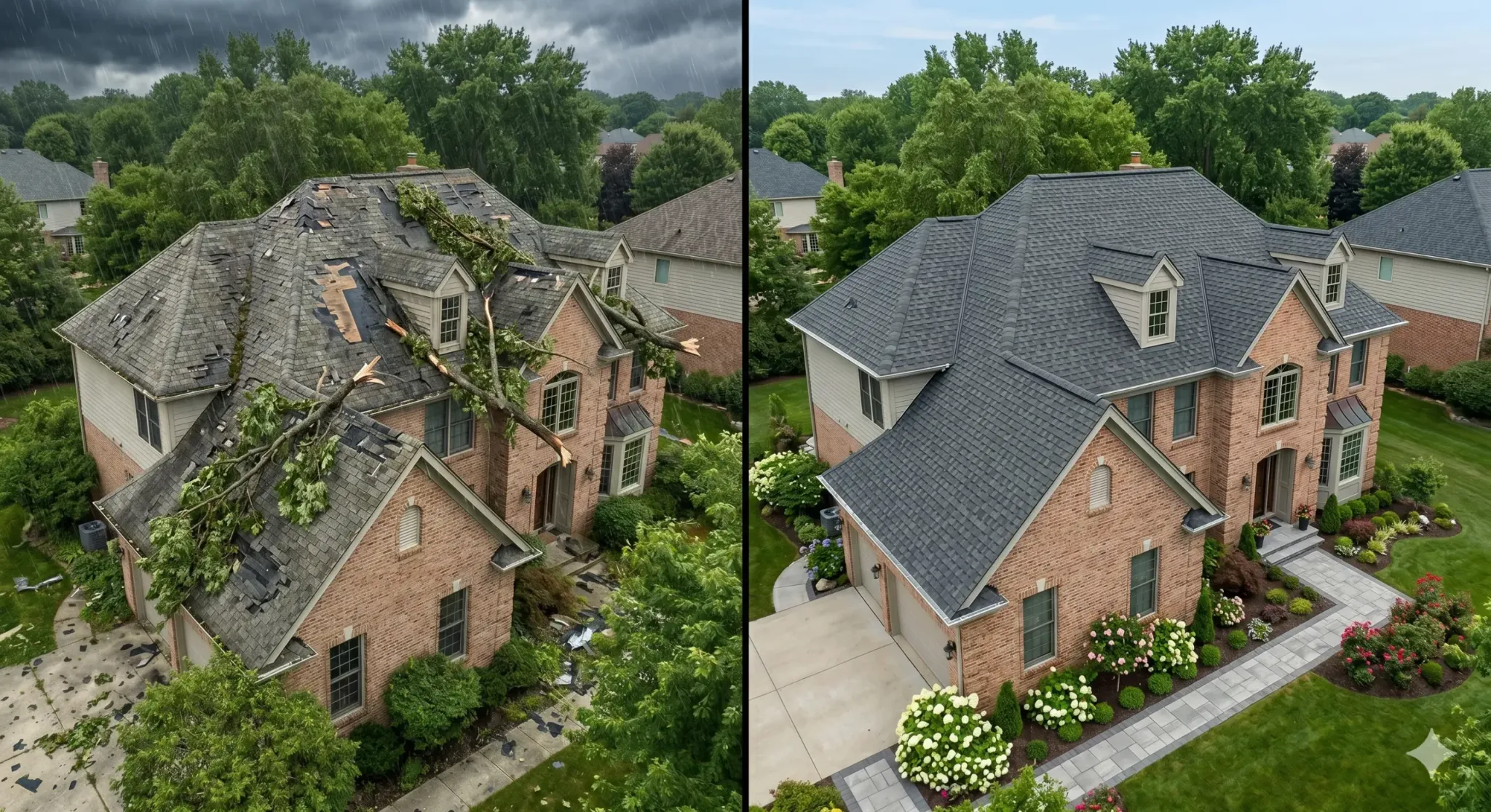
Project-Day Preparation
How to Protect Landscaping and Exterior Features During Roofing Work
Roofing work happens above your landscaping, but debris, foot traffic and equipment placement can affect what is on the ground.
Before work begins, identify plants and features near the roofline, move or cover vulnerable landscaping, clear walkways, and point out anything fragile so the crew can plan equipment placement around it.
Roofing debris does not stay neatly on the roof, and ladders, staging areas and material handling all interact with the ground around the house.
GAF’s homeowner project checklist specifically recommends trimming trees and shrubs away from the work area and moving lawn ornaments, outdoor furniture and other movable items before the project begins.
Around the Property
What to Protect Around the Property
| Area or Feature | Main Risk During Roofing Work | Practical Preparation |
|---|---|---|
| Plants directly under roof edges | Falling debris and foot traffic | Cover or temporarily relocate if possible |
| Delicate or young plants | Debris, foot traffic, dropped tools | Extra protection or temporary relocation |
| Garden beds near the house | Ladder placement, walking paths | Mark boundaries and discuss access needs |
| Patios and walkways | Debris and ladder placement | Sweep clear and keep pathways open |
| Outdoor furniture | Falling debris, dust | Move away from the work zone |
| Grills and fire pits | Debris and equipment traffic | Relocate away from ladder and staging areas |
| Siding near work areas | Ladder contact and falling debris | Note existing condition beforehand |
| Windows below roof lines | Debris impact | Point out any that already have cracks or damage |
| Gutters | Debris accumulation during tear-off | Understand the crew's cleanup plan |
| Irrigation lines | Foot traffic and equipment movement | Mark locations if not obviously visible |
Not every property has every one of these features, and not every project affects the same areas. Use this as a starting checklist rather than an assumption that every item applies to your home.
Debris Moves
Why Roofing Debris Does Not Stay on the Roof
Tear-off and installation work can send material toward the ground, especially near roof edges. Depending on the project stage, debris can include:
- 1old shingles
- 2nails and fasteners
- 3small wood or material fragments
- 4granules from asphalt shingles
- 5general construction debris
Landscaping directly beneath roof edges is naturally more exposed than plantings farther from the house.
That is why the area closest to the building deserves the most attention when preparing the property.
Soft Landscaping
Protecting Soft Landscaping Near the House
Delicate plantings close to the foundation are usually the most vulnerable part of the landscape during roofing work. This includes:
- 1flower beds
- 2small shrubs
- 3delicate perennials
- 4newly planted material
- 5ground cover directly beneath roof edges
Depending on the plant and the project, options may include temporary covering, physical relocation for especially valuable or fragile plants, or accepting a higher risk for hardy, easily replaceable plantings.
Discuss your priorities with the contractor rather than assuming every plant will automatically be protected the same way.
A prized rose bush and an easily replaceable ground cover may not need identical treatment.
Movable Items
Move What Can Be Moved
The simplest protection strategy is relocation.
GAF specifically recommends moving lawn ornaments, outdoor furniture and similar items before roofing work begins.
Before the project, walk your yard and identify movable objects such as:
- 1pots and planters
- 2garden ornaments
- 3small structures
- 4hanging baskets
- 5trellises
- 6delicate seasonal plantings
Anything that can reasonably be relocated away from the work zone removes one more variable from the project.
This is also one of the easiest preparation tasks because it does not require special materials or professional help.
Trees & Branches
Consider Trimming Branches Near the Roofline
Overhanging branches can interfere with roofing work and increase the chance of contact between equipment and vegetation.
GAF specifically advises trimming trees and shrubs close to the house before the project.
If a tree limb overhangs the roof or work area, ask:
- 1Does a tree limb hang close to the work area?
- 2Could equipment placement be affected by low branches?
- 3Is there a risk of falling debris landing in a garden bed beneath the canopy?
- 4Does the tree limit access to one side of the house?
If branch removal requires more than simple yard trimming, particularly anything involving significant height, thickness or proximity to power lines, use a qualified tree-service professional rather than attempting it yourself.
Walkways & Ladder Areas
Clear Walkways and Areas Near Ladder Placement
Roofing crews need safe, unobstructed access around the perimeter of the house.
Before the project, walk the exterior and identify what needs to move. Crews typically need clear access for:
- 1ladders
- 2material stacks
- 3a debris container
- 4temporary tarps or ground covering
- 5a path for carrying materials to and from the roof
Remove garden hoses, toys, tools, decorative items and anything else that could create a tripping hazard or obstruct equipment placement.
This preparation is also a safety issue, not just a property-protection issue.
Clear access reduces the chance of accidental damage caused by equipment having to maneuver around obstacles.
Garden Beds
Garden Beds Near Walking Paths Need Extra Attention
Even careful crews need somewhere to walk and stage materials.
If garden beds sit close to the house, they may be more exposed to foot traffic during the project.
Point out anything you particularly want protected, such as:
- 1a favorite rose bush
- 2a border you have carefully shaped
- 3a young tree
- 4a section of lawn you are trying to establish
Marking boundaries with stakes, flags or another visible method can help the crew recognize planted areas that are not obvious at a glance, particularly for low-growing plants.
Hardscape
Protecting Patios, Walkways and Hardscape Features
Hard surfaces are generally more durable than plants, but they still deserve attention.
Debris can accumulate on patios and walkways during the project, and ladder placement or material handling can occur in these areas.
Useful preparation includes:
- 1sweeping visible debris regularly
- 2keeping walkways usable
- 3watching for nails or sharp material near frequently used paths
- 4confirming a final cleanup check before considering the area finished
If your patio or walkway already has cracks, chips or other damage, note the condition before the project starts.
Windows & Siding
Windows and Siding Near the Work Area
Falling debris can occasionally affect windows or siding located close to the roofline.
Before the project, look at windows and siding sections near the work area.
If you notice existing cracks, chips or damage, mention it to the contractor before work begins.
Documenting pre-existing conditions helps create a clear record of the property’s state before the project, which can prevent confusion later about what existed beforehand versus what may have changed during the work.
Irrigation Systems
Irrigation Systems and Buried Features
Not every yard feature is visible from the surface.
If your property has an irrigation system, low-voltage lighting wires or another buried feature near the work area, mention it before the project begins.
Crews walking the property or placing equipment may not otherwise know these features exist.
If the exact locations are not obvious, consider marking them or providing a simple sketch of known irrigation-head or wiring locations near the house.
Document Beforehand
Document Landscaping and Exterior Conditions Beforehand
Simple photographs before the project can be useful for both the homeowner and the contractor.
GAF specifically recommends taking photographs of the exterior and landscaping before roofing work begins.
A quick photo walk-around can capture:
- 1existing plant health or damage
- 2condition of patios, walkways or siding
- 3any pre-existing cracks in windows or hardscape
- 4the general condition of outdoor structures near the work area
This does not need to be a formal or technical process. A few clear photos from your phone are sufficient to create a helpful before-and-after reference.
Outdoor Items
Move Outdoor Items You Do Not Want Exposed to Debris
Beyond landscaping, consider other items in the yard that could be affected by falling debris or dust. This can include:
- 1furniture
- 2grills
- 3fire pits
- 4planters
- 5décor
- 6toys
- 7garden tools
- 8anything fragile or difficult to replace
If an item cannot be moved, consider whether it can be covered instead.
When in doubt, treat the area directly beneath and around the roofline as a zone where anything valuable or fragile should not remain during active work.
Tell the Contractor
What to Tell Your Contractor Before Work Begins
A brief walk-around conversation with the crew or project manager can prevent avoidable problems. Point out:
- 1irrigation lines
- 2buried lighting wires
- 3delicate plantings not obviously visible from above
- 4ornamental features
- 5anything fragile near the foundation
This conversation does not need to be lengthy. The goal is simply to make sure the crew understands what matters most to you about the property before equipment and materials are staged.
Final Walkaround
Plan a Final Outdoor Walkaround
After roofing work is complete, a final walk-around of the property helps confirm that landscaping and exterior features were treated appropriately. Look for:
- 1fallen debris in garden beds
- 2nails or sharp material in walkways
- 3disturbed mulch or soil
- 4moved or damaged outdoor furniture
- 5any new marks on siding, patios or hardscape
- 6confirmation that ladder placement areas have been cleared
If you notice something that concerns you, raise it with the contractor promptly rather than waiting.
A clear, specific description of what you observed is more useful than a general statement that something seems wrong.
Pre-Project Checklist
Pre-Project Landscaping Checklist
Before roofing work begins:
- 1Identify plants directly beneath roof edges.
- 2Decide whether to cover or temporarily relocate vulnerable plants.
- 3Move furniture, grills, planters and décor away from the work zone.
- 4Point out expensive or hard-to-replace landscape features.
- 5Mark or mention irrigation lines and buried wiring if not obvious.
- 6Clear walkways of obstacles.
- 7Take photos of landscaping and exterior features beforehand.
- 8Confirm where ladders and equipment are expected to be placed.
- 9Ask about the cleanup plan for garden beds and hardscape.
- 10Discuss any tree branches near the work area.
- 11Plan a final outdoor walkaround after work is complete.
Taking these steps ahead of time helps protect your landscaping investment and gives both you and the roofing crew a clear understanding of the property before work begins.
More Project-Day Guides
Prepare for Every Part of the Project
Roofing Cleanup: Debris, Nails & Final Walkaround
Driveway, Parking & Property Access
What to Expect Inside Your Home
FAQs
Frequently Asked Questions
Will roofing debris damage my landscaping?
Debris can fall near the roofline during tear-off and installation, which is why plants and features closest to the house are most exposed. Moving vulnerable items and covering delicate plantings can reduce the risk.
Should I move outdoor furniture before roofing work?
Yes, if it is near the work area. GAF recommends moving lawn ornaments, furniture and similar items before the project begins so they are not exposed to falling debris or foot traffic.
Do I need to trim trees before roofing work?
Trimming branches that hang close to the roofline is commonly recommended. GAF specifically advises trimming trees and shrubs near the house before work starts.
Use a qualified tree-service professional for significant branch removal.
How do I protect delicate plants near the house?
Options include temporary covering, physical relocation for especially valuable plants, or marking their location so the crew is aware of them.
Discuss priorities with the contractor since not every plant needs the same level of protection.
Talk to a Roofer About Property Protection
Speak With SummitShield About Protecting Your Falls Church Property
If you have landscaping, patios or exterior features near the work area, SummitShield Roofing can discuss property-protection planning as part of residential roofing for Falls Church homes so vulnerable areas are identified before work begins.
Direct Roofing Hotline
+18337540319Serving Falls Church, Arlington, Fairfax, McLean, Vienna, Alexandria, and Northern Virginia.
Call Now